

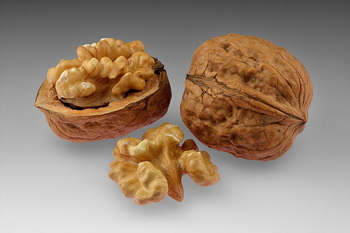

SCT: Intelligent Design in a Nutshell
We’re not giving a short explanation
of ID here; we’re showing ID in a
literal nutshell: the amazing walnut.
This article was first published in Science & Culture Today.
Walnuts: Intelligent Design in a Nutshell — Literally
by David Coppedge
Science & Culture Today, September 19, 2019
Thank you to Paul Nelson who points out a paper in Advanced Science that is both nutty and not nutty at the same time — nutty, because it concerns walnuts; not nutty, because there is nothing silly or unintelligent about the way walnut shells are designed.
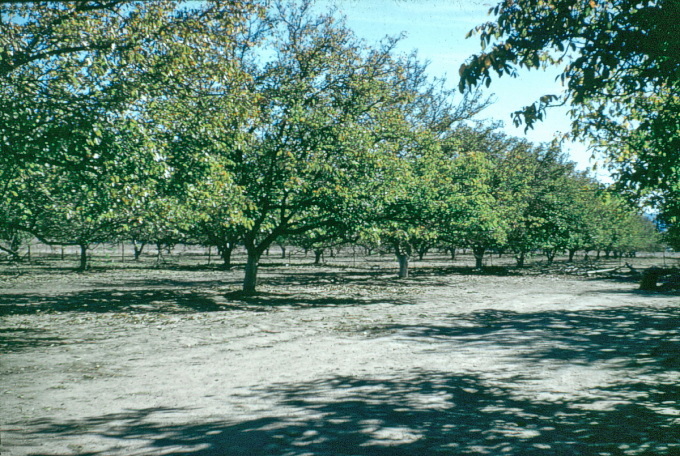
The author grew up on a ranch that had a large grove of English walnut trees that were grafted onto black walnut stocks.
“The outer protective shells of nuts can have remarkable toughness and strength,” say Sebastian Antreich and six others in the paper. Considering that walnuts are widespread and commercially important, they decided to look at the nuts in detail. They found a unique architecture in the shell called “interlocked packing” that resembles a 3-D puzzle.
The outer protective shells of nuts can have remarkable toughness and strength, which are typically achieved by a layered arrangement of sclerenchyma cells and fibers with a polygonal form. Here, the tissue structure of walnut shells is analyzed in depth, revealing that the shells consist of a single, never reported cell type: the polylobate sclereid cells. These irregularly lobed cells with concave and convex parts are on average interlocked with 14 neighboring cells. The result is an intricate arrangement that cannot be disassembled when conceived as a 3D puzzle.
This architecture yields a strong, lightweight material of interest to engineers.
Mechanical testing reveals a significantly higher ultimate tensile strength of the interlocked walnut cell tissue compared to the sclerenchyma tissue of a pine seed coat lacking the lobed cell structure. The higher strength value of the walnut shell is explained by the observation that the crack cannot simply detach intact cells but has to cut through the lobes due to the interlocking. Understanding the identified nutshell structure and its development will inspire biomimetic material design and packaging concepts. Furthermore, these unique unit cells might be of special interest for utilizing nutshells in terms of food waste valorization, considering that walnuts are the most widespread tree nuts in the world. [Emphasis added.]
An animation movie embedded in the paper illustrates the interlocked packing. Now you know why these nuts sometimes require a hammer to open. There are no layers to peel away like an onion. Instead, the whole shell is held together by interlocking pieces, like a 3-D puzzle….
Click here to continue reading, where you will learn other design qualities of walnuts for nutrition and even for fine furniture. If you include walnuts in your Thanksgiving feast, you will have more reasons for gratitude.