


Did Your Pet Evolve?
A disposition toward tame
behavior may be part of
many animals’ created design
Domesticated Animals: Born or Evolved?[1]
Science Agrees with Scripture
by Jerry Bergman, PhD
Evolutionists propose that after the ancient horses ancestors evolved into modern horses, it took more than 26,500 years for horses to become domesticated.[2] How and when they were domesticated is much debated. Most historians believe that all horses were originally wild and were gradually domesticated over time. This process is generally thought to have been slow and difficult—marked by setbacks, requiring many generations, and spanning vast regions before full domestication was achieved.[3] However, the report by Librado et al. reviewed in this paper presents new evidence suggesting that horse domestication occurred much earlier and more rapidly than previously believed.[4]
The research, published in the journal Science Advances, concluded that “Evidence from archaeology, ancient DNA, osteology, and other disciplines shows that horses from multiple genetic backgrounds … were managed, milked, and ridden long before 2200 BCE.”[5] Furthermore, “Horses were being ridden, worked, and traded long before anyone thought it possible. New research pushes back the accepted timeline of human use of horses by centuries, showing that humans used horses in organized ways as early as the 4th millennium BCE, if not earlier.”[6] (mentioned in our report from 13 May 2026).

Pack train in the Sierras (photo by David Coppedge)
Genesis Timeline Gets It Right
This finding brings the estimated date of organized human use of horses closer to the timeline presented in the Genesis creation account. The idea that animals were originally created in a tame state and brought before Adam to be named is a significant theme in Genesis 2:19–20, reflecting the harmony that existed before the Fall. The Biblical text emphasizes that God formed the animals and brought them to Adam, and “whatever Adam called every living creature, that was the name thereof.[7] This account implies that, from the very beginning, animals were tame enough to be closely observed and interacted with by Adam as he named them. As James 3:7 teaches “All kinds of animals, birds, reptiles and sea creatures are being tamed and have been tamed by mankind.” Furthermore, evidence exists that horses, dogs, cats and many other animals possessed characteristics that made them readily tamable when raised by humans—a conclusion consistent with the conditions described in the Garden of Eden (Genesis 1:28).
Many animals, when raised by humans from a very young age—ideally beginning shortly after birth—can become remarkably tame. Examples often cited include elephants, raccoons, skunks, and even crocodiles. By contrast, animals raised in the wild typically develop behaviors required for survival in natural environments.
Crocodiles as Pets
One woman who grew up raising pet crocodiles shared her experience, explaining that she received her first crocodile from hatchlings born to her father’s crocodiles. Living with and caring for crocodiles requires both an appreciation of their power and a respect for their role within the ecosystem.
What makes a creature a suitable pet? Roger Matthews offers an unusual perspective. He notes that he can travel to Europe for two months without worrying about feeding the pet crocodiles he keeps in his backyard. Matthews owns four freshwater crocodiles named Gloopy, Jazzy, Destin, and Cyclops—the latter having lost an eye in a fight.
These men and women are among the proud and unapologetic owners of pet crocodiles in Australia’s Northern Territory, demonstrating that even animals commonly viewed as dangerous or untamable can, under certain conditions, become remarkably accustomed to human companionship.
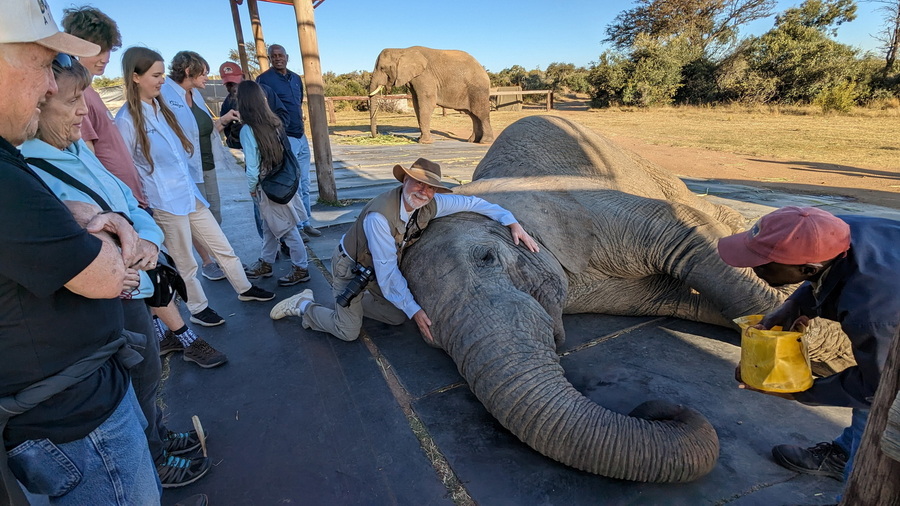
Tourists take turns hugging a gentle rescued elephant with trainers assisting (Adventures with Elephants, South Africa).
Elephants as Pets
One of the most endearing—though unusual—animals kept by humans as pets is the elephant. Both rescued and captive elephants can form deep and lasting bonds with people based on trust, affection, and mutual respect. Elephants are highly intelligent and emotionally complex creatures, allowing strong relationships to develop through long-term care and interaction.
Family relationships are central to elephant society. Herds of mothers and their calves, along with larger social groups, illustrate the elephant’s remarkably complex social structure. These herds often consist of related individuals, including aunts, sisters, and cousins. Elephants are also known for their exceptional memory and strong social awareness. On occasion, they may display aggression toward humans, particularly in situations involving prior traumatic experiences, such as witnessing the killing of another elephant—even years earlier.
One Asian woman, who had rescued an orphaned elephant, commented that taking care of an elephant is “an emotional investment that spans a lifetime. When they embrace you as family, they never let you go. It is a calling that comes with enormous highs but also devastating lows when they die. However, for all the heartbreak, she says I would not change it for the world. To see them through their most formative years is an immense honor and responsibility.”[8]
Raccoons as Pets
One person shared this story about a pet raccoon:
We found our baby raccoon in the fields behind our house. He was a baby; bottle fed him, and he soon became a part of our family. What a sweetheart. I have so many stories about Tonto our pet raccoon. And SO MANY years later I have tears in my eyes when I think about him; I still miss him. And yes, they make excellent house pets.
This account is just one of many that can be found on the Facebook group Raccoon world which has 59 thousand members![9]
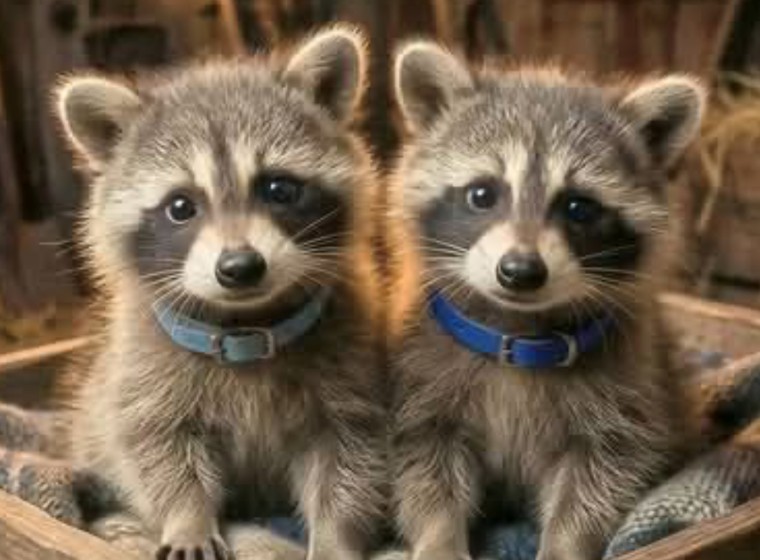
Picture From the Facebook group Raccoon World
Skunks as Pets 
Skunks can make affectionate, intelligent, and entertaining pets. They are generally timid, docile, and non-aggressive, making them manageable pets when raised and cared for properly. However, they can be high-maintenance at times. They can even become destructive if they are kept in the house without adequate litter training. Owners note that skunks require significant attention, socialization, and even “skunk-proofing” of the home to prevent behaviors such as opening cabinets or digging in search of scents beneath floorboards.[10]
Even if a skunk retains its glands, it rarely sprays. Instead, skunks usually give warning signs when they feel threatened, such as stomping their feet, hissing, or raising their tails. Some owners report that their pets may occasionally release a small amount of musk if startled or frightened, but not a full defensive spray. Many owners claim they have never experienced a single intentional spray throughout their pet’s lifetime.
Similar accounts exist involving rabbits, donkeys, bears, rats, llamas, birds, hamsters, guinea pigs, chinchillas, sugar gliders, ferrets, opossums, and 10,000 other species. In fact, I am not aware of any exceptions. While individual temperaments and species differences certainly exist, these observations suggest that the ability of animals to form bonds with humans is far more widespread than commonly assumed.
Summary
Most animals born in the wild must have the defenses and develop the behaviors necessary to survive in their environment. Conversely, many animals display an innate capacity for tameness when raised by humans from a very young age, ideally beginning shortly after birth. This perspective supports the view that a disposition toward tame behavior may be part of their created design. Examples of such behavior are even found among many animals not commonly considered suitable pets.
This conclusion fits well with the biblical portrayal of harmony among animals. Isaiah 11:6 describes the peaceful conditions that will exist during the future millennial reign of Jesus Christ: “The wolf will live with the lamb, the leopard will lie down with the young goat, the calf and the lion and the yearling together; and a little child will lead them.” A similar promise appears in Isaiah 65:25: “The wolf and the lamb will feed together, and the lion will eat straw like the ox, and dust will be the serpent’s food. They will neither harm nor destroy on all my holy mountain,” says the Lord.
References
[1] University of Helsinki, “The first domesticated horses: 6,000 years of a complex story,” EurekAlert, https://phys.org/news/2026-05-domesticated-horses-years-complex-story.html#google_vignette, 13 May 2026.
[2] Librado, Pablo, et al., “The origins and spread of domestic horses from the Western Eurasian steppes,” Nature 598(7882):634–640, October 2021.
[3] University of Helsinki, 2026.
[4] Librado, et al., 2021.
[5] Anthony, David, et al., “Horse genetics, archaeology and the beginning of riding,” Science Advances, DOI: 10.1126/sciadv.ady7336, www.science.org/doi/10.1126/sciadv.ady7336, 2026.
[6] University of Helsinki, 2026.
[7] Morris, Henry, “Adam and the Animals,” Acts and Facts 20(2), 1991.
[8] Sheldrick, Angela, “The Human-Elephant Connection,” Sheldrick Wildlife Trust, https://www.sheldrickwildlifetrust.org/news/fieldnotes/november-2020, 2020.
[9] This quote is from the raccoon world Facebook group: https://www.facebook.com/groups/1724004358092915/. 2026.
[10] https://www.reddit.com/r/Skunks/comments/fyxdsk/hello_i_have_a_skunk_related_question_excuse_my/. 2026.
 Dr. Jerry Bergman has taught biology, genetics, chemistry, biochemistry, anthropology, geology, and microbiology for over 40 years at several colleges and universities including Bowling Green State University, Medical College of Ohio where he was a research associate in experimental pathology, and The University of Toledo. He is a graduate of the Medical College of Ohio, Wayne State University in Detroit, the University of Toledo, and Bowling Green State University. He has over 1,900 publications in 14 languages and 40 books and monographs. His books and textbooks that include chapters that he authored are in over 1,800 college libraries in 27 countries. So far over 80,000 copies of the 60 books and monographs that he has authored or co-authored are in print. For more articles by Dr Bergman, see his Author Profile.