VIEW HEADLINES ONLY

Ski Enceladus

Want the ultimate in powder snow? Ski Enceladus, a little moon of Saturn. The snow is deep and vast. Drawbacks: except for occasional craters and steep canyons, the land is flat; there are no ski lifts; there is no air; you would weigh one or two pounds, and transportation will cost you billions of dollars. Other than that, science news outlets are advertising it as a great place for snow lovers!
Can Biomimetics Shed Light on Evolution?

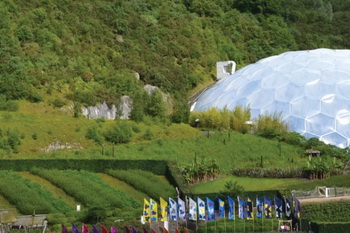
Biomimetics is part science and part engineering. The scientific part is to observe and understand the structure and function of a living thing. The engineering part is to apply that science into useful products. Science news articles today are claiming that a biomimetic flying machine modeled on insects is shedding light on evolution. Such a claim deserves some scrutiny.

Comety Show: Oceans from Space

Finally, a comet has been found with a deuterium-to-hydrogen ratio that is close to that found in Earth’s oceans. That had not been true of many other comets. Astrobiologists claim this ration in Comet Hartley 2 as “proof” that our water came special delivery from water-balloon comets. But why do they believe that, what constitutes proof, and what new problems does the “proof” lead to?

Three Strikes Against Uranus

Uranus has an axial tilt of 98 degrees, giving it the appearance of a bulls-eye as it revolves around the sun. Its moons revolve comfortably around the planet’s equator. This unusual arrangement, unique in the solar system, has challenged planetary scientists since its discovery. A new model accounts for it through a series of gentle bumps from impacts as the planet was forming from dust and gas, but how would one ever test such an idea?

Mercury Messenger: Surprise!

As boring as the moon? Just a burned-out cinder? Not Mercury. True to tradition for planetary exploration, the MESSENGER spacecraft has served up a plate of surprises about the innermost planet. In orbit since March, the ship is sending theorists back to the drawing board to figure out a number of puzzling phenomena, some unique to Mercury. Commentators fall into two categories: those that are flabbergasted, and those who say all is well.

It’s Still a Rare Earth

Now that hundreds of extrasolar planets are known, how do they compare to ours? The Kepler spacecraft has found a varied assortment of all sizes and distances away from their parent stars. Only a few reside in their star’s habitable zones. But that’s only the first of many requirements for life. Two recent studies indicate that Earth remains a rare bird in the celestial aviary.

Where Do Gems and Precious Metals Come From?

Gold, diamonds, and other precious metals and gems... they are found close to the surface of the earth where humans can mine them and make jewelry. But they shouldn’t be there. Heavy elements should have sunk deep into the core of the Earth soon after it was formed. Wait till you hear some of the latest ideas about how precious metals and gems arrived near the surface. Maybe they shot up from the mantle. Maybe they came from outer space.

Early Man Was Like Us

Human evolution theory has been dealt more body blows this month, raising questions whether it can sustain any more injuries after a decade of repeated punches and concussions.

Freakish Star Stuns Astronomers

Astronomers have detected a star that should not exist. Current theory cannot explain the composition of a star in the constellation Leo. This “freakish star,” moreover, is probably not unique. What is it, exactly, that modern star formation theory does explain?

Lucky in the Sky with Diamonds

There are treasures all around us we do not perceive. Sometimes we speak figuratively about sparkling gems that are, if we realized it, literally real, right there under our noses. Children sing, “Twinkle, twinkle little star, how I wonder what you are, up above the world so high, like a diamond in the sky” without knowing that there really are diamond stars up there, with diamond planets, so magnificent and huge they are unfathomable in value. These are actual discoveries that have been announced by scientists this week.

8.7 Million Species Is Not a Scientific Fact

Human beings love to classify things. We pigeonhole items into bins of our own making, for whatever the reason, to give us a feeling of having things organized and understood. Do our pigeonholes reflect categories that are “out there” in nature, or are they constructs of our own minds? Science reporters are announcing in bold print that there are “8.7 million species on Earth,” but a look at the fine print shows the error bars to be so enormous, there is more error than data. What does this imply about the scientific validity of human classification schemes?

Archaic Humans Are One With Us

According to the biological species concept, two varieties of anything are considered one species if they can interbreed and produce fertile offspring. Applied to humans, new evidence suggests that Neanderthals and the recently-discovered Denisovans were members of the human species. According to New Scientist, “On the western fringes of Siberia, the Stone Age Denisova cave has surrendered precious treasure: a toe bone that could shed light on early humans’ promiscuous relations with their hominin cousins.” Since one can only be promiscuous within the same species, this puts enormous pressure on evolutionary timelines that assume the Denisovans split from the Neanderthals 300,000 years ago.

Another Crash in Lunar Tunes

Our moon has two faces. One is the familiar man-in-the-moon side that always faces Earth. The other side is mountainous and heavily cratered, possessing a thicker crust with almost none of the large impact basins we see as dark maria on the Earth-facing side. The giant impact theory for the origin of the moon – that a Mars-size object hit the Earth and the debris coalesced into our planetary companion – has been controversial since it was first proposed. Will adding another impact help? It all depends on what one means by “scientific progress.”

Planetary Eruptions

Eruptions can come in two types: literal and figurative. Some planetary bodies are literally erupting. Others are causing figurative eruptions in theories. Here are some recent news stories about planets, moons, comets and other objects circling our sun and other stars. There hasn’t been much news from Mercury or Venus this month, so we’ll start on the home planet and work outward.

Dinosaur Protein Is Primordial

Scientists from 10 universities and institutions have verified that the collagen protein in dinosaur bone is primordial – i.e., from the dinosaur, not from later contamination. By first studying the molecular packing of collagen in living animals, and using X-ray diffraction modeling, they matched the surviving collagen molecules to those that would most likely survive degradation. They feel this establishes the authenticity of the protein fragments against claims of contamination and simultaneously offers a mechanism for its resistance to degradation.
All Posts by Date
[archives type="yearly" cat_id="19"]