VIEW HEADLINES ONLY

Cambrian Explosion: Sedimentary, My Dear Flotsam

"Then something happened." Question: are you reading a science article, or a fictional screenplay? Are you in the Science Department or the Humanities Department? Are you in the lab or the theater? Find out in today's episode of "Explain the Cambrian Explosion."
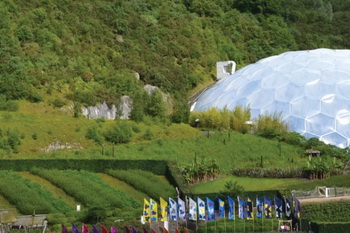
Is This Plant Really 30,000 Years Old?

A plant said to be 30,000 years old has been brought to life in Russia. A team resurrected a fruit from a rodent burrow in Siberian permafrost, getting it to grow into a whole plant that produces viable seeds. This is now the oldest age claim, by an order of magnitude, for plant material made to live again. Other scientists are startled that plant material could remain viable for so long, since cells have to repair their DNA continually. Other botany news bring different problems to evolutionary theory.

Small Animals Show Even More Design

Your smart phone is a triumph of miniaturization. The first computers were room-filling monstrosities; now, you can hold more computing power than a Univac in the palm of your hand. In the living world, we should't despise small creatures. They can pack a lot of technology into a small space. Here are some record-setting examples of living miniatures reported recently.

Dinosaurs Display Death in Watery Grave

Many dinosaur fossils show the animals with neck arched backward. This appearance is so common, it has been dubbed the "dinosaur death pose." Various theories have been invoked to explain it: dessication and final death throes among the most common. A study with chickens shows the arching neck is the automatic response of immersion in water.

Psychologist Advocates Sin

Is sin scientific? Or is a scientist sinning who advocates sinning? One psychologist has written a book about the joy of sin.

Fish Came from the Land

If you were taught fish evolved in the ocean, think again. There's a new idea that most fish evolved on land.

OOL for Landlubbers

No part of the universal evolutionary scenario gets more overhauls than the origin of life. Some say it began in the sea, some on the land. Some say it began at the bottom of the sea; others say that is the worst place for life to get going. The latest idea favors freshwater hot springs on land.

More Reasons to Doubt Scientific Pronouncements

It’s unsettling to hear scientists say that long-held beliefs might be wrong, but that’s the nature of science. Scientific “findings” are tentative, not absolute. Some see this as a strength of science, but unless actual progress is demonstrated, that strength is called into question. Recent news casts doubt on various scientific methods and beliefs that had been trusted for a long time.

Humans Evolved from Dogs

A new finding shows dogs performing better on one kind of intelligence test than chimpanzees. If evolution teaches that human intelligence is the main trait separating us from other animals, and dogs are smarter than apes, shouldn’t the conclusion be that dogs are closer on the family tree? If not, is it valid for evolutionary biologists to pick and choose the traits that matter?

How the Zebra Got Its Just-So Story

Evolutionists have updated Kipling’s fanciful story, “How the Leopard Got Its Spots,” with a new, improved, scientific tale, “How the Zebra Got Its Stripes.” They actually gathered empirical data to show for it. Not all evolutionists are convinced, however, that it changes the genre from just-so story to scientific explanation.

Innovation as a Dodge

This is not a truck commercial. It’s not about a Dodge as an innovation, but innovation as a dodge. It’s about how a word, innovation, is used as a euphemism in evolution articles. The word seems to mean, “we have no clue how this evolved, but it must have for evolution to be true.” It’s a handy rhetorical trick, because without it, a reader might be tempted to think the evidence supports creation. Some recent articles show how the trick is employed.

Rethinking Parasitism

Parasitism is bad. Parasitism is evil. Parasites wage war against innocent hosts. This is our mindset. What if parasites can do good? This change of heart seems to be happening for one case, the case of transposable genetic elements. If they are only doing harm to the host, why did some biologists find that “positive selection” seems to be maintaining them? That makes it sound like the cells need them.

Mouse to Elephant? Just Add Time

How do you evolve a mouse into an elephant? Just add 24 million generations. But you can shrink it back down in just 100,000 generations. This and other eyebrow-raising stories have been told in the secular science media recently.

Lunar Upsets Challenge Paradigms

Forty years after the last moonwalkers came home, new discoveries about the moon are calling into question what scientists know about our celestial partner. But is it legitimate for scientists to invoke mystery forces when a favored theory faces falsifying evidence?

Turning an Unevolved Horseshoe Crab Into a Darwin Showpiece

Horseshoe crabs are survivors by anyone’s measure; they have carried on their lives virtually unchanged, according to the standard evolutionary timeline, for 450 million years. This not only points to incredible stasis against alleged forces of evolution; it also means they have survived at least three global extinctions that evolutionary biologists and geologists say wiped out most other species. Not only that, the world has changed drastically since they allegedly evolved from who-knows-what arthropod ancestors – perhaps trilobites, that appeared in the Cambrian Explosion without ancestors. But the numerous, successful trilobites did not survive the global extinctions. Given these contradictory facts, how can the horseshoe crab possibly be an exhibit for evolution? A recent article shows how.
All Posts by Date
[archives type="yearly" cat_id=""]