


The Wonder of Life in Earth’s Driest Places
The world’s driest non-polar desert is
more hospitable than space. Evolutionists
view organismal adaptation as evidence for
macroevolution, but is this a valid notion?
The Wonder of Life in Earth’s Driest Places
The Case of the Atacama Desert
by Dr. Sarah Buckland-Reynolds
The Atacama Desert in northern Chile is often described as the driest non-polar desert on Earth. With less than 200 mm of rainfall annually, high soil salinity, and extreme temperature fluctuations, it appears to be a landscape largely inhospitable to life. Yet recent research has revealed a remarkable truth: even in the Atacama, beneath the parched soils, life endures. These remarkable findings were reported in a January 2026 study.
 Geographic distribution of nematodes in the Atacama is associated with elevation, climate gradients and parthenogenesis (Villegas et al., Nature Communications, 19 Jan 2026). The study was led by Laura Villegas and colleagues from the University of Cologne. Their finding were recently highlighted in the popular ScienceDaily outlet on 2 March 2026.
The study found that soil nematodes (microscopic roundworms) are thriving in surprising diversity within the Atacama. Rather than merely surviving, these nematodes demonstrated resilience that astonished scientists and invites deeper reflection on the wonder of life and its origins. As the authors explain:
“…soil nematodes, an abundant and diverse group of invertebrates, display distinct biodiversity patterns across the Atacama at multiple biological scales, including genetic, taxonomic, community, and life-cycle levels.”
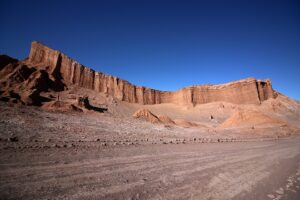
Portion of the Atacama Desert (Wikimedia Commons)
This discovery challenges long-held assumptions about the limits of life and raises profound questions about design, adaptation, and the meaning of resilience in creation.
Life in the Dry Limit: More Hospitable Than Space
Although liquid water is essential for the survival of living organisms, the soils of the Atacama Desert, extreme as they are, remain far more hospitable than the lifeless vacuum of space. Within this harsh landscape, small but significant microhabitats, such as fog oases, dune systems, and saline patches, create ecological niches where life can persist. In these protected environments, soil nematodes continue to survive and reproduce despite the desert’s severe conditions.
In commenting on the persistence and stability of the nematode populations in the Atacama, the researchers note:
“We show that even under extreme environmental conditions, soil niches can sustain stable and diverse invertebrate communities, although some areas show signs of simplified food webs.”
Observing the remarkable adaptability of these organisms in such environments, scientists have long deduced this as potential evidence that if life could adapt to extreme conditions on earth, it could likely adapt in extreme extraterrestrial environments. The Atacama Desert, in particular, has frequently been cited as a natural laboratory for astrobiology. For example, a 2023 article published in the Journal of the Indian Institute of Science (Springer Nature), identified organisms surviving in the Atacama as key examples of extremophiles studied as potential “great candidates for astrobiological studies.”
However, when one examines the actual conditions in earth’s extreme environments, the contrast that exists in extraterrestrial settings is striking. Even in deserts where liquid water is scarce and UV radiation is intense; life still finds footholds in protected microhabitats. In space, by contrast, there is no soil (only barren regolith), no water cycle, and no protective atmosphere to shield organisms from radiation and temperature extremes.
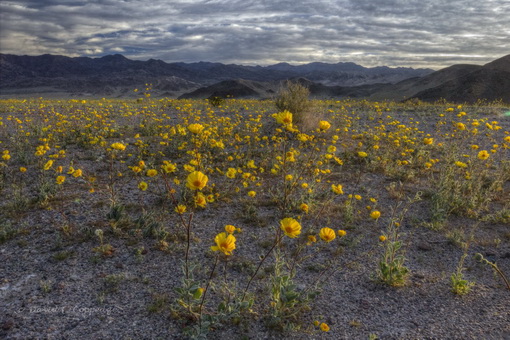
The Atacama Desert sometimes exhibits rare “superblooms” like this one in Death Valley, California.
The Atacama therefore reminds us that Earth, even in its harshest corners, is uniquely designed for life. The resilience of nematodes in this desert underscores the fine-tuned conditions of our planet, conditions that cannot be explained by chance but point to purposeful design.
Adaptation Does Not Equal Molecules-to-Man Evolution
Evolutionary narratives often interpret adaptation as evidence for mutation and natural selection in their broader worldview of molecules-to-man progression. Yet adaptation itself simply demonstrates the built-in capacity organisms possess to respond to environmental pressures.
In the Atacama Desert study, researchers found that “the likelihood of nematode taxa being asexual is greater at higher elevations than in lower ones.” This reproductive strategy may enhance survival under extreme conditions, but it does not generate fundamentally new biological complexity or entirely new kinds of organisms. Rather, it represents a shift within the range of variation already present in the population.
Much like other examples observed across the globe, the Atacama research on adaptation reflects conservation rather than biological innovation. Nematodes are not evolving into new creatures; they are utilizing pre-programmed survival strategies that allow them to persist under harsh conditions. Indeed, the study itself acknowledges that “genus richness follows a latitudinal gradient and increases with precipitation,” meaning that biodiversity is strongly influenced by environmental factors, not by upward evolutionary progress.
What we observe, therefore, is variation within existing biological groups rather than a progressive transformation from one kind of organism into another.
From an intelligent design perspective, such adaptability reflects foresight in creation. Organisms were endowed with the capacity to withstand environmental extremes, not through blind trial-and-error, but through purposeful engineering. The persistence of nematodes under the harsh conditions of the Atacama Desert illustrates the resilience built into living systems. Rather than demonstrating evolutionary novelty, their survival highlights the remarkable robustness and flexibility inherent within created.
Critiquing Evolutionary Interpretations
In contrast to an intelligent design perspective, evolutionary frameworks claim that environmental pressures gradually sculpt life into higher forms. Yet findings from the Atacama Desert point in the opposite direction: biodiversity correlates with the availability of moisture, while extreme dryness reduces ecological complexity. The researchers themselves note that “simplified soil food webs suggest vulnerability to further environmental change.” Rather than illustrating progressive advancement, this pattern reflects ecological constraint, degeneration, and reduction under harsh conditions.
Asexual reproduction may provide nematodes with a survival advantage in the harsh conditions of the Atacama, but it simultaneously narrows genetic diversity and limits genetic recombination and can reduce long-term adaptability. Such strategies do not represent evolutionary progress but rather a trade-off within existing biological limits.
The study further observed that “community composition appears to become more dissimilar with increased geographical distance between the different localities,” a pattern consistent with ecological distribution shaped by environmental gradients. In other words, what we see is variation across habitats rather than evidence of large-scale evolutionary transformation.
Comparing the Design Perspective
From an intelligent design standpoint, rather than evolutionary progression, the Atacama’s nematodes highlight purposeful engineering. Their ecological roles, including but not limited to nutrient cycling, bacterial regulation, and soil health, show foresight in sustaining ecosystems. As the authors reiterate:
“nematodes… contribute to soil nutrient turnover, carbon sequestration, and regulation of bacterial populations, making them important indicators of soil condition.”
Their ability to thrive even under the desert’s extreme conditions highlights the remarkable resilience built into living systems. The Atacama’s hidden life testifies to a design that anticipates environmental extremes and equips organisms to survive even at the “dry limit”.
Burrowing to the Glory of God
The Atacama Desert, with its hidden nematode communities, offers yet another striking reminder of God’s provision and sustaining care even in the wildernesses of this world. Amidst its dry soils, nematodes remain resilient and defy expectations. Although evolutionists may interpret the nematodes’ adaptability as evidence for molecules-to-man evolution, it is more reasonable to view it as evidence of pre-engineered flexibility and foresight in design. While the fragility of simplified food webs warns us of ecological vulnerability, the continued persistence of life under such extreme conditions points us to a Creator who faithfully sustains His creation.
The Atacama’s hidden life echoes the Biblical affirmation that creation is upheld by divine wisdom. Psalm 104 celebrates God’s ongoing provision: “He makes springs pour water into the valleys; it flows between the mountains. They give water to all the beasts of the field…” (Psalm 104:10–11). Even in deserts, God’s provision is evident. Likewise, Isaiah 45:18 declares: “For thus says the Lord, who created the heavens… who formed the earth and made it… He did not create it to be empty but formed it to be inhabited.” Even in the harshest environments, life quietly testifies to a world fashioned with wisdom and sustained by the hand of its Creator.
 Dr. Sarah Buckland-Reynolds is a Christian, Jamaican, Environmental Science researcher, and journal associate editor. She holds the degree of Doctor of Philosophy in Geography from the University of the West Indies (UWI), Mona with high commendation, and a postgraduate specialization in Geomatics at the Universidad del Valle, Cali, Colombia. The quality of her research activity in Environmental Science has been recognized by various awards including the 2024 Editor’s Award from the American Meteorological Society for her reviewing service in the Weather, Climate and Society Journal, the 2023 L’Oreal/UNESCO Women in Science Caribbean Award, the 2023 ICETEX International Experts Exchange Award for study in Colombia. and with her PhD research in drought management also being shortlisted in the top 10 globally for the 2023 Allianz Climate Risk Award by Munich Re Insurance, Germany. Motivated by her faith in God and zeal to positively influence society, Dr. Buckland-Reynolds is also the founder and Principal Director of Chosen to G.L.O.W. Ministries, a Jamaican charitable organization which seeks to amplify the Christian voice in the public sphere and equip more youths to know how to defend their faith.