


SCT: Muscular Hydrostats Defy Evolution
What’s a muscular hydrostat?
It’s a feature in some animals
that’s worth knowing about
This article was first published this week in Science & Culture Today.
Independent Origins of Muscular Hydrostats
Are Another Conundrum for Evolution
by David Coppedge
Science & Culture Today, October 27, 2026
What do these animals have in common:
a squid, a snake, an elephant, a chameleon, and an octopus?
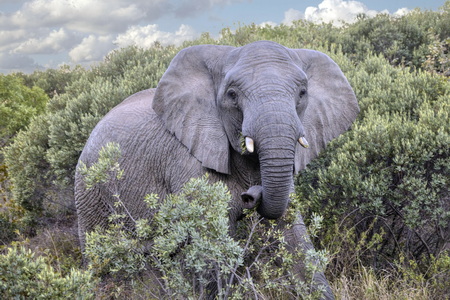
They belong to vastly different taxons, but each of them possesses a remarkable structure called a muscular hydrostat. These elegant, “beautiful,” and highly functional structures, exemplified by octopus arms and elephant trunks, are the subject of a fascinating Primer by Noel Naughton in Current Biology. Expect to be amazed at the engineering design of these boneless structures that can move with near-infinite degrees of freedom.
First, let’s review some terms and physiological facts. A hydrostat (“water-stationary” object) is any structure that can maintain its shape by means of fluid. A water balloon is an example. If you squeeze the middle of a long water balloon, Naughton explains, the rubber must stretch outward to maintain fluid balance. This is because water is nearly incompressible. Fluid-filled hydrostats exist in nature, such as with roundworms and earthworms, which can push the fluid into spaces to allow movement.

Octopus arms are prime examples of muscular hydrostats. From Wikimedia Commons.
Muscular Hydrostats
Replace the fluid with muscle and you have a muscular hydrostat. Two of the best examples can be found in animals vastly separated on the evolutionists’ phylogenetic diagrams: the arms of the octopus, and the trunk of the elephant. Professor Naughton focuses on these amazing structures. They share surprising commonalities despite their presumed “evolutionary” distance.
Muscles can only pull; they cannot push. In the human body, we have opposing muscles to achieve a single degree of freedom. For instance, the biceps muscle pulls the forearm at the elbow, and the triceps muscle pulls it back. Six more degrees of freedom are granted by other sets of opposing muscles that allow twisting and lateral motions.
Naughton has diagrams of the musculature inside the elephant trunk…
Click here to continue reading.