
Robert Boyle
December 28, 2012
In this roster of great scientists who were Christians and creationists, occasionally one stands out as worthy of a gold medal. The requirements are stringent. The person needs to have performed exceptional scientific work, that produced some fundamental discovery, or advanced the scientific enterprise in a highly significant way; perhaps to be known as the father of a branch of science or the discoverer of a fundamental law of nature.
Simultaneously, the person needs to have been a devout Christian whose personal life and character was befitting the honor. Yet some who fulfilled both these qualifications did little to relate their Christian faith to their scientific work; they were Sunday Christians and weekday secular scientists.
The third qualification involves advancing philosophical understanding of the relationship between science and Biblical Christianity, or actively combatting unbelief and skepticism. All these requirements were met with room to spare in the next honoree of this series, Robert Boyle. He not only can be considered a pillar of modern science – and one of its most eminent practitioners – but he also left the world a profound legacy of rich literature explaining the Christian foundation for science.
Hugh of St. Victor
December 28, 2012
Hugh of St. Victor illustrates that medieval Europe should not be labeled with that disparaging anachronism, “the Dark Ages.” A remarkably clear thinker and learned man, he had no time for superstition and magic, but instead advocated knowledge and investigation of the natural world. He had remarkable scientific insight for someone living six centuries before the rise of modern science, and he built his philosophy squarely on the foundation of the Bible, especially Genesis.
Robert Grosseteste
December 28, 2012
Robert Grosseteste was extremely important to the early development of modern science, yet he is sure to be almost unknown to most readers. This medieval pastor, however, exemplifies the theme of our series, that it was Christian beliefs that motivated science, and it was great Christians who ignited the scientific revolution.
Click "See All" below for a complete list of our scientist biographies.

Sir Francis Bacon
December 28, 2012
Is Christian philosophy good for science? In this series we showcase many examples, but the case could hardly be made stronger than to point to Mr. Scientific Method himself, Sir Francis Bacon.
Although not a practicing scientist, Bacon is considered by many historians to be the “founder of modern science.” His philosophy and writings were largely responsible for igniting the scientific revolution in the 17th century. Numerous intellectuals like Robert Boyle and Isaac Newton seized on the “new philosophy” of Bacon that emphasized empiricism and induction. Casting aside dependence on authorities like Aristotle, the new science exploded on the scene, yielding a wealth of discoveries and inventions that has continued unabated to this day. But this “new philosophy” was really nothing new; it was a return to the principles of the Bible. The “founder of modern science” was a Bible-believing Christian, and Christian doctrine was the foundation of his thinking.
Roger Bacon
December 28, 2012
Roger Bacon was a man ahead of his time. In the so-called “Dark Ages,” he foresaw a world of flying machines, powered ships, telescopes and other inventions that would result from experimental science. His faith in science was born out of his faith in God.
Index to Scientist Biographies
December 28, 2012
Adler, Mortimer (1902-2001), psychology, history, philosophy Babbage, Charles (1791-1871), mathematics, computer science Bacon, Francis (1561-1626), philosophy of science Bacon, Roger (1214-1294), medieval science Bell, Charles (1774-1842), anatomy, medicine Bergman, Jerry, author, professor Boyle, Robert (1627-1691), chemistry, philosophy of science Brewster, David (1781-1868), physics Carver, George Washington (1864-1943), agricultural chemistry Chain, Ernst Boris […]

Blaise Pascal
December 2, 2012
Pascal excelled at just about everything he tried: mathematics, physics, hydrostatics, hydrodynamics, mathematics, statistics, invention, logic, debate, philosophy, and prose. We speak of “pascals” of pressure, Pascal’s Principle, and a computer language named Pascal. Computer scientists remember the Pascaline, an early mechanical calculator he invented, and mathematicians speak of Pascal’s triangle. Literary historians call Pascal the Father of French Prose, and theologians debate Pascal’s Wager while evangelists use it to reason with sinners about the gospel. Few, however, know much about the personal life of this scientific and mathematical genius. He knew pain, he knew conflict, and he knew Jesus Christ with a depth and sensitivity that few experience. And he accomplished all his discoveries without reaching his 40th birthday.
Pascal’s last writings are all the more poignant when we remember he wrote much of them while suffering intensely. A contemporary wrote, “He lived most of his adult life in great pain. He had always been in delicate health, suffering even in his youth from migraine ...” Pascal died at age 39 in intense pain from stomach cancer. After his death, a servant found a surprise in the lining of Pascal’s coat....

Louis Pasteur
November 1, 2012
Who contributed more to the saving of human lives than any other scientist? Who has been called the greatest biologist of all time? Who revolutionized medicine and public health with his discoveries? A creationist and a Christian – Louis Pasteur. Let no one claim that faith in God is detrimental to science; you need look no further than to this great man who said, “The more I study nature, the more I stand amazed at the work of the Creator.”
Pasteur was a humble, godly Catholic who served God and his fellow man through science. If you enjoy milk that doesn’t spoil in a day, if you enjoy a wide variety of healthy foods, if you can take a quick shot and then live without fear of deadly diseases, if you enjoy a longer life than your ancestors did, you should thank the good doctor from France, because you owe much of your physical health and safety to him. But your ultimate thanks should go to the Great Physician, who taught the Israelites many principles of good health and sanitation in the Bible. Pasteur merely rediscovered and elaborated on two basic ideas from the Old Testament: (1) uncleanness causes disease, (2) life was created, and propagates after its kind. Pasteur’s discoveries sounded the death knell for centuries of evolutionary speculation.

Wernher von Braun
August 6, 2012
Wernher von Braun is important in this series because he was recent enough to be in the living memory of many, and we have a great deal of documentation, photographs and motion pictures of him. Even young people (that is, anyone born after 1972) who did not live through the glory days of Apollo are all familiar with three of von Braun’s last great projects he took from vision to reality: the Space Shuttle, orbiting space stations and interplanetary travel. Unquestionably, he had a great deal of help. One does not do rocket science alone! At the height of the Apollo program, some 600,000 employees were involved in tasks from machining parts to managing large flight operations centers. Yet by wide consensus and by results achieved, Wernher von Braun was a giant among giants: highly regarded by his peers, respected by all who worked with him, a celebrity to the public, showered with honors, and unquestionably responsible for much of the success of the space program. Few have ever personally taken a dream of epic proportions to reality. The peaceful exploration of space! It was the stuff of dreams — dreams by Kepler, Jules Verne, science fiction novels and countless childhood imaginations, yet today it is almost too commonplace. Von Braun dreamed, but made it happen. He was the right man with the right stuff at the right time.
Leonhard Euler
July 1, 2012
Here is the true story of a very interesting individual, one whose name will ring a bell for anyone who has studied higher mathematics, because his name is associated with dozens of theorems, proofs, algorithms, constants and laws. Though not a scientist by training, he contributed immeasurably to science by advancing its language (mathematics) and its toolkit of operations. According to math professor Howard Anton, he “made major contributions to virtually every branch of mathematics as well as to the theory of optics, planetary motion, electricity, magnetism, and general mechanics.” His name was Leonhard Euler (roughly pronounced oiler), a true genius who was also a committed Christian all his life.
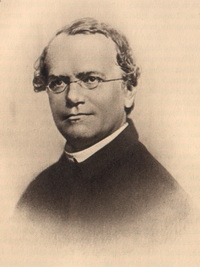
Gregor Mendel
April 30, 2012
The story of Gregor Mendel is aggravating. It makes you wonder what might have been, had this Austrian monk encountered Charles Darwin, and had his discoveries become known to the disciples (and opponents) of Darwinism early on. Mendel today is widely honored as the Father of Genetics. Using exemplary methods of controlled experimentation, he showed that inheritance was not fluid but rather discrete. Traits were passed on in pairs of fixed alleles; in effect, heredity was not analog, but digital. This put the Darwinians into a tailspin until they found a way in the 1930s to rescue evolution with "neo-Darwinism" which relies on accidental mistakes (mutations) in the genetic code. Creation geneticists prove, however, that the neo-Darwinists hope in vain for natural selection to rescue the theory from genetic entropy. Mendel's discovery survived the revolution in genetics occasioned by the discovery of the structure of DNA. He is still regarded as an exceptional scientist even though he was a religious man, and his Laws of Genetics have stood the test of time.

Antony van Leeuwenhoek
April 21, 2012
It’s not often that a layman untrained in science makes a fundamental discovery, starts a new branch of science, and alters the course of human history. Nor is it often that a layman shows exemplary scientific technique that becomes a model for scientists to come. Antony van Leeuwenhoek was such a person. Extremely inventive, careful, and precise, unfettered by false notions of the day, Leeuwenhoek was driven by an insatiable curiosity that captivated him at age 40 and kept him going to his dying day at age 91. It started when he read a copy of Robert Hooke’s new illustrated book Micrographia in 1665, which contained drawings of insects, cork, textiles and other things revealed under a microscope at magnifications about 20-30x. Leeuwenhoek took to grinding his own lenses and making his own microscopes. Perfecting a technique that raised the power to over 200x, he opened up a whole new world never before seen by man: the world of microorganisms.
Schierbeek says, “Leeuwenhoek was driven by a passionate desire to penetrate more deeply into the mysteries of creation. To him, as to many others of his time, a watch was a greater specimen of craftsmanship than a clock in a tower; this opinion is reflected in his biological views. The microscope gave him the opportunity to study and admire the small organisms, the 'animalcules,' and whenever he was able he expressed his admiration of the beautiful things he saw.”
Dr. Irwin Moon
October 20, 2011
This month we want to remember a science popularizer who had an enormous impact through film. Dr Irwin Moon, founder of Sermons from Science and Moody Institute of Science (1945-1996), produced a string of movies that were extremely popular in churches during the 1950s through 1990s. They are still available from Moody Video and some are on YouTube. The legacy of Dr Moon is now stronger than ever through the work of Illustra Media.
John Stevens Henslow
October 20, 2011
John Stevens Henslow is the scientist who made Darwin famous. The eminent Cambridge professor of botany was like a father to Darwin, but Henslow was a Christian and creationist.
Dmitri Mendeleev
October 20, 2011
Every science student is familiar with the Periodic Table of the Elements. It is one of the great “patterns” in nature discovered by careful, painstaking work in chemistry by many scientists over many years. The one who is most famous for putting the pieces together in a systematic way is Dmitri Mendeleev, a Russian chemist from the late 19th century. Many have heard of Mendeleev, and know his connection to the periodic table, but few realize that confidence in Biblical creation stimulated his scientific work.


