
Artemis II: Engineering Triumphs Over Storytelling
The mission showed that
testable science and trust in
God complement each other
We waited till the astronauts were on the deck of the carrier before adding our congratulations for the achievements of NASA’s Artemis II flight, because the mission was highly risky, especially in the last half hour. But its spectacular success highlights the difference between engineering and ‘scientific’ speculation.
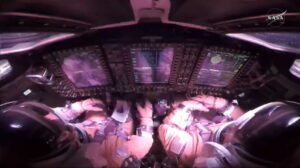
Astronauts Read Wiseman and Victor Glover inside the Orion capsule during re-entry on April 10, 2026.
Engineering has little room for storytelling. A bridge has to stay up. A spacecraft has to work. There’s little tolerance for error. In a day when scientific misconduct is rampant, it’s instructive that the Orion spacecraft carrying the four crew members was named Integrity. Engineering and integrity fit together like hand and glove. There’s no need for storytelling.
Did any of these astronauts need to hear that they had Lucy as an ancestor a million years ago, or that an octopus emerged under the sea by natural selection? Evolutionary storytelling has a huge tolerance for error, because the Darwinians constantly revise their stories (see 9 March 2018). The engineers of Artemis II knew that the lives of four astronauts were on the line if their intelligently designed components did not work.
What makes engineering successful is the dependability of natural laws. I’m sure those glued to the TV yesterday evening were astonished at how CapCom could tell the astronauts that the communication blackout due to plasma during the heat of re-entry would last exactly six minutes. And it did. Or that the angle of approach to the atmosphere would land them off the coast of San Diego rather than send their spacecraft skipping off the atmosphere to their deaths in blackness of space. Every component of the mission, from parachutes to thrusters to seat belts, had to be tested for success in advance. Those tests were possible because of the dependability of laws of physics.
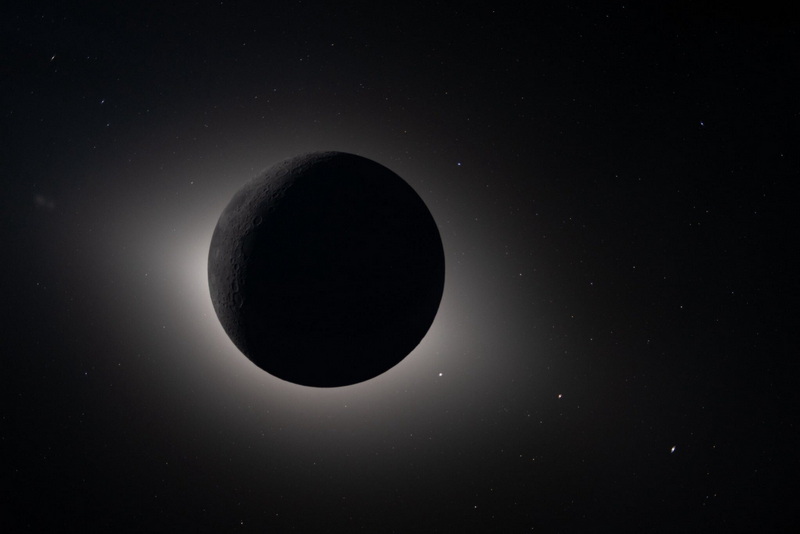
While their spacecraft was behind the moon, the Artemis crew also got to witness a solar eclipse unlike any visible from Earth, in which the sun appeared smaller than the moon in the sky as it disappeared behind the lunar horizon. “The eclipse occurred, and then we had 5 minutes of human emotional reaction to staring at that orb floating in the vastness of space,” said Wiseman. “Then right after that, somebody in the cabin said, ‘Let’s look for impact flashes,’ and immediately we saw one or two or three.” (New Scientist, 11 April 2026)
Someone needs to calculate how many impacts would hit the moon over 4.5 billion years at that rate!
The “solar eclipse” seen by Artemis II behind the moon, 6 April 2026. Flashes of light from meteor impacts were observed on the lunar surface.
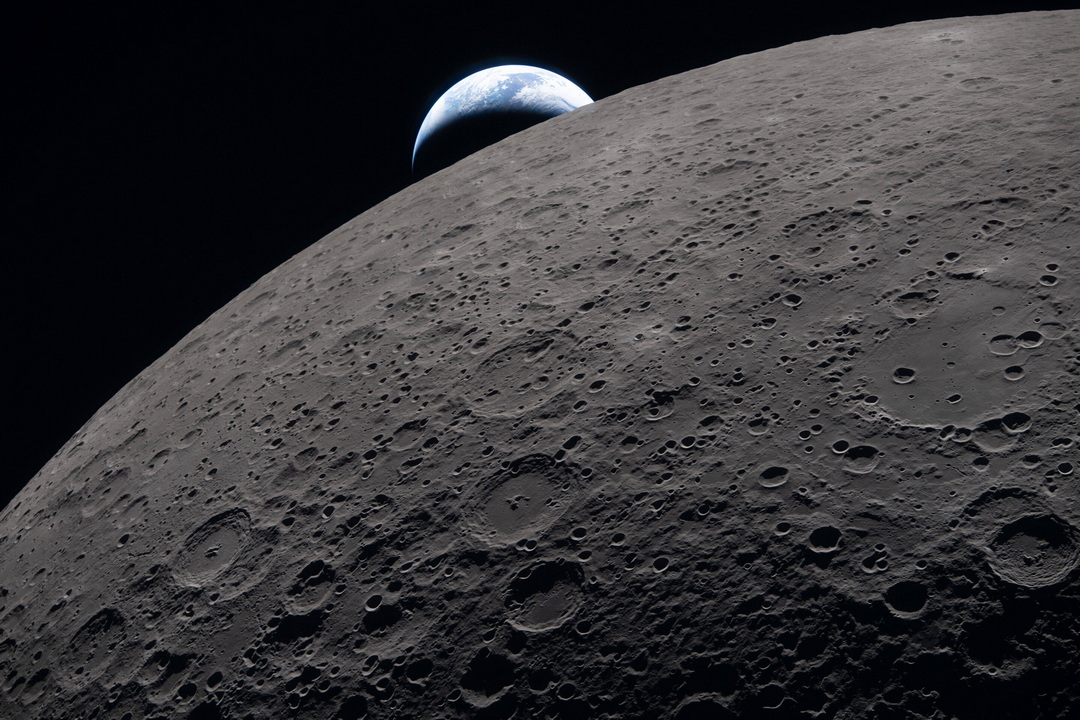
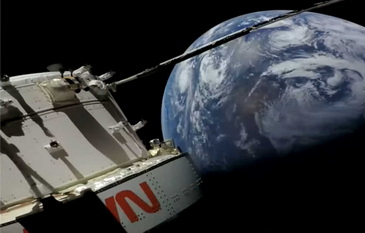
Humans are more than thinkers; we are feelers, too. The reaction of the astronauts to the wonders they were beholding. The beauty of that “Earthset” image behind the moon, and the glory of seeing Earth on approach, sent waves of emotion through the astronauts who were highly trained in science, physics, and engineering in addition to flight. From behind the moon on Easter Sunday, Canadian astronaut Victor Glover expressed his faith as the other three astronauts looked on with approving looks:
As we are so far from Earth and looking at, you know, the beauty of creation I think that, for me, one of the personal perspectives I have up here is I can really see Earth as one thing, and, you know, as I read the Bible and learn about all the wonderful things that were done for us who were created, you have this amazing place—this spaceship—you guys are talking to us because we are in a spaceship far from Earth, but you’re on a spaceship called Earth that was created to give us a place to live in the universe, the cosmos. Maybe the distance we are from you makes you think what we’re doing is special but we’re the same distance from you, and I’m trying to tell you—just trust me—that you are special. This is a whole thing of nothing, this thing we call the universe; we have this place where we get to exist together. I think as we go into Easter Sunday all the cultures around the world, whether you celebrate it or not, whether you believe in God or not, this is an opportunity for us to remember where we are, who we are, that we are the same thing and we gotta get through this together.”
The crew shook his hand and CapCom commended his impromptu statement. As the crew approached blackout behind the moon, Glover continued,
“As we get close to the nearest point to the moon and the farthest point from Earth – as we continue to unlock the mysteries of the cosmos – I would like to remind you of one of the most important mysteries there on Earth, and that’s love,” Glover said, moments before NASA lost communication. “Christ said, in response to what was the greatest command, that it was to love God with all that you are – and He also, being a great teacher – said the second is equal to it, and that is to love your neighbor as yourself.
“And so as we prepare to go out of radio communication,” Glover said, his words beginning to fade in and out, that he feels the “love from Earth” and “to all of you down there on Earth and around Earth – we love you from the moon.” (quoted by The Heartlander, 7 April 2026).
Yes, our Spacecraft Earth needs a Guide for Passengers. That guide is in the Word of the Creator himself.
Though Artemis is named after a Greek goddess, the alleged sister of mythical Apollo, nobody worships those any more. Nobody riots against Christian missionaries, chanting “Great is Artemis of the Ephesians!” as they grip and wave silver statues of the idol (Acts 19). Today we know better. We have a new idol: Darwin-Baal, the nature god of the Stuff Happens Law, whose image secular scientists worship with zeal and intolerance against heretics.
The God of creation, by contrast, is transcendent over all, the eternal, omnipotent, omniscience Uncreated One who gave us not only our perfect habitation on Spacecraft Earth, but also the laws of the universe that made engineering, faith, and love possible.