

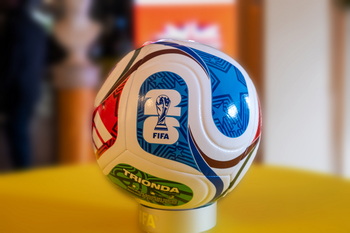

Can Soccer Glorify God?
As we approach the World Cup Finals, we reflect
on the biological processes necessary for playing soccer|
and how even these leisurely activities point to God’s handiwork
God’s Glory Seen in Soccer (Football)
by Dr. Sarah Buckland-Reynolds
For the past month and a half, many around the world have been placing their attention to the world of football (soccer) entertainment. Whether we are attracted to the thrill of watching our favourite player dribbling the ball skillfully away from the opposing team, in awe at a goal kick that appears gravity-defying, impressed at the speed of our favourite midfielder racing down the pitch or marveling at the nimble diving catch from our favourite goalkeeper, beneath the entertainment lies a profound question: how is such complex, coordinated play even possible?
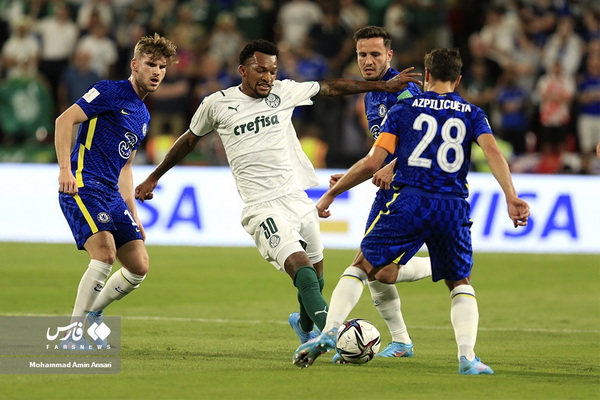
Source: Wikimedia Commons
While the science behind football may be the furthest thing from our minds while watching our favourite match, the reality is that these skillsets are not merely simple reflexes but requires the coordination of biological systems, psychological resilience, and social cognition for the human body to operate with such dexterity.
While intricately connected systems of coordination from the central nervous system, cardiovascular system and even the immune system operate simultaneously to achieve the spectacle of football skills, many take for granted that even humans’ ability to play football can be used to declare evidence for the Creator. And so as we approach the World Cup Finals 2026, we take the opportunity to reflect on some of these hidden biological mechanisms, and what it implies as it pertains to the origins debate.
Biological and Psychological Prerequisites for Football
Humans’ ability to participate in rigorous athletic activities with strategic components and goals requires the involvement of:
 neurological coordination
- musculoskeletal strength
- cardiovascular endurance
- psychological resilience
- social cognition and teamwork
- proper functionality of the immune system.
Despite awareness of the complexities involved in sports, evolutionary literature maintains its position to view athletic activity as merely an ‘adaptation.’ One such article examining the biological complexities involved in human sporting activity while promoting evolutionary theory was titled:
 Human athletic paleobiology; using sport as a model to investigate human evolutionary adaptation (Longman, Wells, and Stock, Yearbook Of Physical Anthropology Article, 20 January 2020).
In their summation of the requirements for human athletics, Long, Wells and Stock admitted that these skills involve numerous processes including: “…energy expenditure, thermoregulatory energetics, signaling theory, and morphological variation….” Yet, even with this backdrop, they frame these processes as evidence for adaptation. In their words, Long, Wells and Stock argue that:
“…sport has facilitated exploration not only of the evolutionary history of our species as a whole, but also of human variation and adaptation at the interindividual and intraindividual levels. At the species level, analysis of lower and upper limb biomechanics and energetics with respect to walking, running, and throwing have led to significant advances in the understanding of human adaptations relative to other hominins…”

Source: Wikimedia commons
In their commentary, they equate the changes in morphological dynamics and efficiency based on levels of physical activity as a sort of ‘selective pressure’ that results in enhancing locomotion, and even resulting in longer bones in future lineages (presumably through epigenetics) that conferred “…demonstrable benefits at a variety of walking speeds…”
However, is this equivalence of morphological changes from exercise as a mechanism of macroevolution really valid? For one thing, adaptation and natural selection do not explain the origins of sporting and athletic abilities in the first place!
To genuinely appreciate the breadth of coordination required to achieve football and other athletic skills, let us explore further the mechanisms required:
- Neurological Coordination: At the heart of football lies the brain’s extraordinary ability to integrate sensory input with motor output. When a striker anticipates a defender’s tackle, neurons fire in milliseconds, predicting trajectories before the ball even moves. The cerebellum fine-tunes balance, while the motor cortex orchestrates muscle contractions. This predictive processing requires a fully integrated system. A half‑formed neural circuit would not confer advantage, but it would collapse under the demands of play. Only a complete design makes football possible. If using the reasonings of athletics as a sign of adaptation, the origins of the brain’s predictive circuits cannot be accounted for by evolutionary mechanisms, as these must already exist for locomotion to be even possible for further fine-tuning of muscular coordination.
- Musculoskeletal Strength: Another component required for play is the musculoskeletal system. The human foot has the ability to arch, providing spring and stability, while the ankle’s flexibility allows precise control of the ball. The knee, often maligned as fragile, is in fact a marvel of engineering, capable of absorbing shock while enabling explosive jumps. To also achieve balance, muscles coordinate in ‘agonist‑antagonist’ pairs, ensuring smooth motion. More specifically, to kick a ball, the quadriceps (front thigh muscles) act as the agonist muscle (the primary mover in the action) to extend the knee. At the same time, the hamstrings (back thigh muscles) operate as “antagonists,” opposing the force and lengthens or relaxes to allow movement. This controls the motion, so it does not overshoot or injure the joint. Operating autonomously, how, and why would such interdependence evolve by accident? Is it not more reasonable to point to foresight and purpose?
-
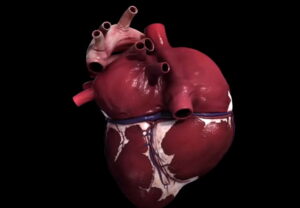
The heart is a masterpiece of engineering, working flawlessly 24 x 7 for decades for most people. It adapts to the demands of vigorous activities like sports.
Cardiovascular Endurance: The heart and lungs also operate as a key coordinated system in football and other sports. With at least ninety minutes of sprinting, tackling, and pressing, players require a cardiovascular system that can deliver oxygen efficiently. The heart’s four chambers, the lungs’ alveoli, and the haemoglobin molecules in red blood cells all work together to supply the athlete’s needs. If one element is removed, the system (and the player) collapses. Even under normal, less stressful circumstances, evolutionists struggle to explain how such interlocking parts could arise piecemeal. The continued operation and coordination under stress further testifies to the marvels of these systems. While exercise can increase the maximum volume of oxygen that a human system can absorb and transport, this is only possible because the heart, lungs, and haemoglobin already exist in a coordinated system.
- Psychological Resilience: Beyond biology, football demands psychological resilience. Players must regulate emotions under pressure, maintain focus amid distraction, and recover from setbacks. The prefrontal cortex enables decision‑making, while neurotransmitters like dopamine and serotonin sustain motivation. These faculties go beyond ‘survival’ to enable symbolic play, teamwork, and joy.
- Social Cognition: In addition to biological and psychological factors, team sports such as football require social cognition. In football, players must anticipate strategies, uniquely read teammates’ intentions, and execute plays with shared understanding. No other species follows abstract rules and pursues symbolic victory. This transcendent ability points to humans as image bearers of God, endowed with creativity and purpose.
A Red Card for Evolution
Football’s Use of Formerly Designated ‘Vestigial Organs’

Dr Jerry Bergman debunks specific examples of so-called vestigial organs. Click to order.
Beyond these processes and systems, football presents another blow to evolutionary thought, as the processes of play uniquely utilizes several organs that were once designated as ‘vestigial’ by evolutionists. Among these include:
- The Appendix: Athletes rely on optimal digestion and immunity to sustain performance. As the appendix is now recognized for immune function and gut flora regulation, without the appendix’s role in maintaining gut health, endurance would falter.
- The Spleen: During high‑intensity play, the spleen plays a role in regulating oxygen delivery. At times in the past, the spleen was being considered vestigial but now is known to filter blood and recycle red cells, which are essential for sustaining athletic exertion.
- The Coccyx: The “tailbone” stabilizes pelvic muscles crucial for running, balance, and kicking. If this is removed, the biomechanics of football collapse.
Football: A Uniquely Human Ability
Even beyond the biological processes, football represents an example of the unique creativity and awareness that characterizes humanity as a distinct entity than animals. For consistency and fairness, humans have devised structures, rules, and symbolic meanings which all come together in a tournament as coherent as the World Cup.
Uniquely as humans, for example, football tournaments involve rule abstraction. For the purposes of entertainment, this illustrates humans’ ability to conceive and enforce rules beyond survival needs. This capacity reflects higher reasoning, the origins of which are difficult to justify from random processes of evolutionary mechanisms. The sharing of symbolism within teams and even in goals, also goes beyond the simplistic motivators of ‘food’ and ‘shelter’ highlighted by evolution.
With all these masterpieces, it is no wonder that the World Cup tournament has also become a stage for the proclamation of faith. Even while playing competitively, it is refreshing to see players huddled in prayer, pointing heavenward in gratitude, and explicitly giving glory to God for their gifts.
Whatever we do, do all to the Glory of God!
As many of us connect and put aside our differences when engulfed in watching the world of sport, we can use our common interests as a springboard for evangelism. For your next watch party, especially if it is with a science afficionado or actual scientist, here is an opportunity to share small snippets of how even our football skills can be a living testimony to the marvelous work that God made to allow our bodies to achieve these skills.
Football is one fun example of how our built-in abilities subtly testify through seemingly mundane activities to the existence of God. When players lift their hands in praise after scoring, they also testify as role models to remind us that these abilities are gifts, not accidents.
This also is a challenge for all of us to not take for granted the works of the Lord in our own lives – even in our seemingly ‘mundane’ activities. As the Scripture says:
“So, whether you eat or drink or whatever you do, do it all for the glory of God.” (1 Corinthians 10:31)
 Dr. Sarah Buckland-Reynolds is a Christian, Jamaican, Environmental Science researcher, and journal associate editor. She holds the degree of Doctor of Philosophy in Geography from the University of the West Indies (UWI), Mona with high commendation, and a postgraduate specialization in Geomatics at the Universidad del Valle, Cali, Colombia. The quality of her research activity in Environmental Science has been recognized by various awards including the 2024 Editor’s Award from the American Meteorological Society for her reviewing service in the Weather, Climate and Society Journal, the 2023 L’Oreal/UNESCO Women in Science Caribbean Award, the 2023 ICETEX International Experts Exchange Award for study in Colombia. and with her PhD research in drought management also being shortlisted in the top 10 globally for the 2023 Allianz Climate Risk Award by Munich Re Insurance, Germany. Motivated by her faith in God and zeal to positively influence society, Dr. Buckland-Reynolds is also the founder and Principal Director of Chosen to G.L.O.W. Ministries, a Jamaican charitable organization which seeks to amplify the Christian voice in the public sphere and equip more youths to know how to defend their faith.