


How to Celebrate Moon Day Monday
In celebration of International Moon Day (July 20),
we explore some lesser-known functions of the earth’s
moon and how it also points to a young, created earth.
Marvels of Earth’s Moon
A Commemoration for International Moon Day
by Dr. Sarah Buckland-Reynolds
From ancient times, civilizations have been fascinated with celestial bodies, including the earth’s moon. The soft aura of its illumination, reflecting that of the sun, and the seasonal markers that it provides, have formed part of cultural practices in fields such as agriculture and in the demarcation of cultural and religious festivals for millennia. While many in our modern times may not be as fascinated with the moon as those of the past (especially with the brightness of urban lighting), the earth’s moon still performs many functions that we all rely on in daily life.
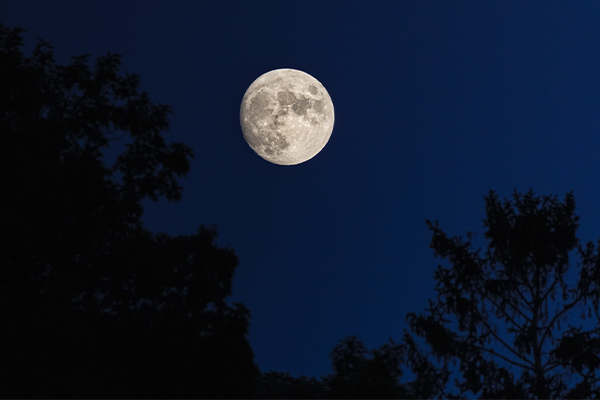
photo by Jenny Wise
July 20 marks a special day in commemoration of the moon, as it is the anniversary upon which humanity is recorded to have set foot on the moon (on July 20, 1969). In 2021, this date was officially selected by the United Nations to celebrate International Moon Day (IMD), with the dual aim to honour Apollo 11’s achievement while fostering global dialogue on sustainable lunar exploration. The 2026 main celebration will take place in Bogotá, Colombia, featuring scientists, policymakers, and educators.
Beyond exploration, this day presents an opportunity to explore how God designed the moon as more than just a glowing ornament in the night sky – but a precisely designed object that continues to declare His glory to generations.
The Moon’s Functions Beyond Illumination: A Look at Tides
Earth’s moon is located at an average distance of around 384,400 km (238,855 miles) away from the earth. Despite the fact that the National Aeronautics and Space Administration (NASA) documents that the moon’s diameter is only around one-third the size of the earth, and that its distance would allow 30 Earth‑sized planets to fit between Earth and itself, its presence performs profound functions encompassing influences on climate regulation, navigation, marine biodiversity, human biorhythms and even nutrient cycles on earth.

Credit: Illustra Media
In further detail, these functionalities include being the primary driver of tides. The Moon’s gravitational pull produces two high tides and two low tides each day. These tides are not just the rise and fall of water levels, rather, their existence plays many essential roles in Earth’s ecological balance, including:
- Nutrient cycling: Tides flush nutrients into estuaries and mangroves, sustaining rich ecosystems. Without tides, these habitats would stagnate, depriving countless species of food.
- Marine biodiversity: Intertidal zones, alternately submerged and exposed, host unique organisms adapted to rhythmic change. This biodiversity depends on the Moon’s gravitational rhythm.
- Navigation and fishing economies: For centuries, sailors and fishers have relied on tidal charts. The Moon’s predictable cycles underpin human economies.
- Climate regulation: Tides redistribute ocean heat, moderating Earth’s climate. Without this circulation, regional climates would be far more extreme.
Yet, beyond just the creation of tides, the earth-moon distance and its size facilitates that earth’s oceans experience tides of just the ‘ideal’ range of magnitudes. Moon’s gravitational acceleration at Earth’s surface is estimated at around 3.4 × 10⁻⁵ m/s² (about one‑millionth of Earth’s gravity), with a tidal differential force (pull between the near side and far side of Earth) of only 1.1 × 10⁻⁶ g. This range ensures tides rise only a few metres, not hundreds.
In its effect, this ensures that while ecosystems are sustained, tides do not normally destroy coastlines. In terms of nutrient cycling, if the force were too weak, ecosystems would stagnate too strong, they would be washed away. With all these examples, if tides were stronger or weaker, human civilization would be far more precarious.
In addition to the precision of its gravitational effect given its distance and size, there is noteworthy mathematical precision in the resulting frequency of tidal cycles. Each tidal cycle lasts about 12 hours 25 minutes, slightly offset because Earth rotates faster than the Moon orbits. This produces the familiar 50‑minute daily delay in tides.
 Such precision allows for accurate tidal calendars, enabling ancient civilizations to build lunar‑based calendars. Temporal order is often an indicator of fine-tuning, which presents an issue for those who believe in the moon’s random formation.
More than Just Tides
Although the multiple functions of earth’s tides would be enough evidence to show the wisdom of God embedded in creation, the moon also performs many other functions, including:
- Stabilizing Earth’s Axial Tilt: The moon’s gravitational influence is believed to greatly stabilize the earth’s tilt, which is crucial for ensuring the balance of the earth’s seasons. Long-age cosmologists teach that without the Moon, Earth’s tilt could vary chaotically between 0° and 85°, producing extreme climate swings. However, with or without invoking long ages, the Moon’s gravitational influence plays a role in stabilizing earth’s tilt which remains steady at about 23.5°. This ensures predictable seasons and a climate suitable for agriculture and human civilization. This stability is essential for life.
- Regulating Biological Rhythms: In addition to its stabilizing effect, the Moon influences biological rhythms for both humans and animals. Many marine species spawn according to lunar cycles, synchronizing reproduction with tides. Even human sleep patterns have been seen to show subtle correlations with the full Moon.
Earth’s Moon: Evolved or Evidence for a Young Earth?
Amidst the moon’s fine-tuning, mainstream scientific organizations such as NASA maintain an evolutionary hypothesis to the moon’s origins. In their description of the moon’s formation, they assert that:
“The Moon likely formed after a Mars-sized body collided with Earth several billion years ago.
The resulting debris from both Earth and the impactor accumulated to form our natural satellite 239,000 miles (384,000 kilometers) away. The newly formed Moon was in a molten state, but within about 100 million years, most of the global “magma ocean” had crystallized, with less-dense rocks floating upward and eventually forming the lunar crust.”
This dominant scientific model is also called ‘the Giant Impact Hypothesis’ or ‘the Theia Impact.’ Cosmological evolutionists suggest that this collision between a Mars-like proto-planet (Theia) and the proto-earth occurred ~4.5 billion years ago, with debris from the collision coalescing into the Moon. The ‘evidence’ often purported to support this hypothesis include the isotopic similarity between rocks from the moon and the earth (particularly for oxygen). They also point to similarities between the earth and moon in terms of high angular momentum (consistent with massive impact), and the moon’s low density and small iron core (thought to imply it formed from lighter crustal material, not from a full planetary body).

The Apollo missions brought back moer surprises than answers. Apollo 17 astronaut Harrison Schmitt samples subsurface soil, while Eugene Cernan assists. Art by Alan Bean, Apollo 12 astronaut (used by permission).
However, does this random collision hypothesis rationally align with the multiple functionalities of our moon? Beyond not accounting for the development of such purposeful alignments between earth and moon function, several other caveats exist to critique this theory, including: Why would a collision only produce one stable satellite instead of several?
Other observations have been documented in Nature Communications to “contradict predictions,” such as why earth’s mantle and lunar rocks appear similar if the collision really happened between earth and a separate body. Even simulations have been documented to fail because of the impact energy that would have been required to form the moon, that do not balance other parameters that would be required. This has raised questions in the scientific community about the cosmological feasibility of this hypothesis.
The hypothesized timeframe and mechanism for the moon’s formation presents further problems for the theory from a young earth perspective. Based on the estimated recession of the moon away from the earth (~3.8 cm (about 1 to 1.5 in)/year), a uniformitarian/gradualist view raises questions, as, if Earth were billions of years old, the Moon would have been so close in the past that tides would have been unimaginably destructive, eroding continents and destabilizing ecosystems. Yet the evidence shows stable tides. Could even the uniformitarian logic itself then support the idea that the Earth‑Moon system is much younger than evolutionary models propose?
More Evidence for Design: Earth’s Moon in Contrast with Other Planetary Moons
Considering the design of the earth’s moon would be incomplete without comparing its uniqueness in comparison with other planets in our solar system. As examples, while several planets have multiple moons, their presence does not function in a life-supporting role as does earth moon. For instance:
- Mars’ two tiny moons (Phobos and Deimos) produce only a weak gravitational pull. If Earth had such moons, our oceans would stagnate, ecosystems would collapse, and climate regulation would fail.
- As of March 2026, NASA has recognized Jupiter as hosting 101 moons, including massive Ganymede and volcanic Io. Despite holding a record number, Jupiter’s moons produce chaotic gravitational pulls that destabilize Jupiter’s system. If Earth had multiple large moons, tides would be erratic and destructive.
- Saturn’s Titan has methane seas, but its large gravitational influence would wreak havoc on Earth’s oceans.
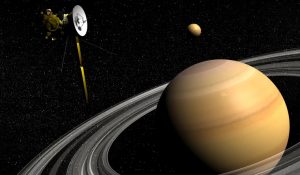
Saturn and Titan (NASA)
Our Moon Glows with the Wisdom of God
This International Moon Day is an opportune time to celebrate the goodness of God in creating such a well-designed object that even with its distance and relatively small size, maintains nutrient balance, climate equilibrium, aids in navigation, stabilizes earth’s seasons, and even regulates biorhythms. Yet, amidst its multiple functions, the Bible describes earth’s moon in Genesis 1:16 as the “lesser light to govern the night.”
Amidst the unfaithfulness of humanity over the millennia, worshipping the moon creation or, modern idolatry giving the glory to evolution instead of to the Creator, the moon still serves as a faithful witness in the sky (Psalm 89:37) proclaiming the charitable characteristics of God.
As we celebrate International Moon Day, let us recognize the Moon as both a scientific marvel and a divine testimony. The next time we walk under its glow, may we pause in awe and give glory to the Creator who ordained the Moon to govern the night and sustain life on Earth. And, knowing that if God took so much detail in designing the moon and cares even more for us, may we declare the words of Psalm 8:3-4:
“When I consider your heavens, the work of your fingers,
the moon and the stars, which you have set in place,
what is mankind that you are mindful of them,
human beings that you care for them?”

Earth is a shining jewel in the blackness of space, ideally suited for life, with a moon just right for keeping it habitable. Photo: Earthrise from Lunar Reconnaissance Orbiter, December 2015
 Dr. Sarah Buckland-Reynolds is a Christian, Jamaican, Environmental Science researcher, and journal associate editor. She holds the degree of Doctor of Philosophy in Geography from the University of the West Indies (UWI), Mona with high commendation, and a postgraduate specialization in Geomatics at the Universidad del Valle, Cali, Colombia. The quality of her research activity in Environmental Science has been recognized by various awards including the 2024 Editor’s Award from the American Meteorological Society for her reviewing service in the Weather, Climate and Society Journal, the 2023 L’Oreal/UNESCO Women in Science Caribbean Award, the 2023 ICETEX International Experts Exchange Award for study in Colombia. and with her PhD research in drought management also being shortlisted in the top 10 globally for the 2023 Allianz Climate Risk Award by Munich Re Insurance, Germany. Motivated by her faith in God and zeal to positively influence society, Dr. Buckland-Reynolds is also the founder and Principal Director of Chosen to G.L.O.W. Ministries, a Jamaican charitable organization which seeks to amplify the Christian voice in the public sphere and equip more youths to know how to defend their faith.