


Be Critical of Artificial Life Claims
The quest to create artificial life
continues for discussion in the
Artificial Life Conference, August 17-21
‘Artificial Life’? A Critical Analysis
by Dr. Sarah Buckland-Reynolds
The manmade creation of artificial life has long been the subject of science fiction. However, stemming from a foundational atheistic belief and embracing evolution, this objective has also been the subject of scientific debate and sci-fi fan discourse alike up to the present. With the advent of Artificial Intelligence (AI), some hold the view that this endeavour is at the cusp of success.
This intriguing (and somewhat disturbing) dialogue on the matter of artificial life continues to be the subject of an upcoming conference, to be held in Waterloo, Canada from August 17–21. The Conference, titled: The Artificial Life Conference (ALIFE 2026), sets its theme as “Living and Lifelike Complex Adaptive Systems”, with a “focus on understanding, replicating, and extending the fundamental principles of life” and “explor[ing] simulation and synthesis of life or life as it could be in media or elsewhere in the universe.”
In the context of this event, it is appropriate to reflect on the underpinning philosophies and implications of the manmade creation of life. Is this endeavour philosophically neutral? What are the moral and ethical implications if man believes he succeeds to claim mastery over life’s origins?
Historical Background: Failed Attempts at Artificial Life
Although modern science uses Darwin’s theory of evolution by natural selection as its main framework in which life was seen as the outcome of gradual accumulation of favorable traits, attempts to replicate or “manufacture” life long predate Darwin’s theory of evolution. From ancient Greek philosophy through medieval vitalism and Enlightenment chemistry, thinkers speculated about spontaneous generation and the possibility of creating life from nonliving matter. Regardless of the era, a worldview that seeks to replicate life has a diminished view of its sacredness as solely the work of the Divine Creator.
Persistent Views of Spontaneous Generation
For much of recorded history, the dominant view for those holding that life could be created artificially was spontaneous generation. This theory had the underlying assumption that life is reducible to material processes and can emerge without divine intervention. Aristotle argued that certain forms of life could emerge directly from nonliving matter, for example, worms from decaying flesh or mice from stored grain. Thales proposed that all things came from water, while Anaximander suggested that humans first developed inside fishlike creatures before emerging onto land. Xenophanes recognized fossils as the remains of ancient organisms, and Empedocles imagined that living beings were assembled from combinations of elemental parts.
After the scientific revolution and the invention of the microscope enabled the disproving of the spontaneous generation theory, attempts were made to assess whether inorganic (non-living) molecules were fundamentally different from organic molecules (building blocks for life). One of the earliest documented examples quoted of the first artificial synthesis of an organic compound was of Friedrich Wöhler in 1828 who synthesized urea from ammonium cyanate, which supposedly showed that an “organic” compound could be produced artificially.
Soon thereafter was the Darwinian era, and the proliferation of its underlying evolutionary philosophy. While Darwin was not an atheist, his counterparts (particularly Charles Lyell) explicitly stated their desire to free science from Moses), which further compounded upon the quest to explain away life as being accidental. Once this framework was established, scientists began to attempt replication in a more systematic way in the laboratory. The idea was that: if life is chemistry, then chemistry can be manipulated to produce life anew.

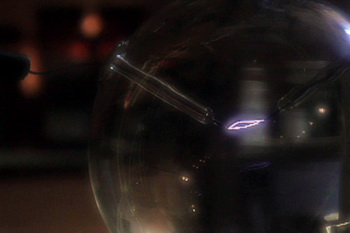
Stanley Miller at spark-discharge apparatus, 1953
These traditions laid the groundwork for later experiments like Miller–Urey, which attempted to recreate the conditions of Earth’s primordial soup by sparking a mixture of gases with electricity. While produced amino acids, the amino acids produced were a racemic mixture, containing both left‑handed and right‑handed forms which would create the condition of death, not life. Life requires strict homochirality (left‑handed amino acids). While other researchers such as Alexander Oparin attempted to produce organic molecules, the structures formed could not reproduce. Attempts at protocell production were also inert. In addition to the fact that amino acids alone do not constitute life as they do not form a genetic code, nor cellular machinery, nor organized metabolism, there has been no experiment that has been successful in recreating life.
Modern Headlines: Illusions of Success
Despite these failures, modern headlines continue to trumpet breakthroughs in synthetic biology and artificial life. Reports claim that humanity has “cracked the code of life,” that scientists are on the verge of creating living organisms in the laboratory. Yet closer examination reveals that these claims are misleading. All experiments rely on preexisting biological materials: DNA, proteins, and membranes. For example: in the twenty‑first century, Craig Venter’s team announced the creation of a synthetic genome, which they transplanted into a preexisting cell. Despite using preexisting biological material, this was heralded as the “dawn of synthetic life”. Yet, all was done was the modification of life already designed.
These repeated failures highlight a fundamental truth: life is irreducibly complex. It is not merely a collection of molecules, but an organized system of information, purpose, and interaction. Chemistry alone cannot explain the origin of the genetic code, the intricate machinery of the cell, or the unity of biological processes. Each attempt to replicate life has stumbled upon the same barriers: chirality, information, organization, and irreducible complexity.
Ironically, despite its label of ‘artificial’ life, the conference itself acknowledges this scope, based on studying existing life. In their words: “Artificial life research focuses on understanding, replicating, and extending the fundamental principles of life.” However, if life could originate ‘artificially’, it should not rely on replication and extension, (nor should it even rely on human intervention!) To claim the objective of artificial life or suggesting it has been achieved when using preexisting materials is to blur the line between engineering and creation. It is akin to rearranging bricks and claiming to have invented clay.

Cartoons by Brett Miller. Used by permission.
Dangers of Artificial Life Research
Beyond the misleading labels and failed experimentations, there are several dangers of the pursuit to create artificial life that are worth mentioning. Philosophically, by assuming life can be manufactured, humanity risks reducing living beings to mechanisms, stripping them of dignity and meaning. Ethically, artificial organisms could be weaponized, exploited, or unleashed without control. Spiritually, the attempt to “play God” echoes the Tower of Babel: humanity’s prideful effort to ascend to divine status. The conference program itself acknowledges these risks, listing “Ethics, Existential Risks, and Philosophy of Artificial Life” among its topics. Yet the framing often treats ethics as an afterthought, not a foundation.
Scripture offers a radically different perspective. Genesis declares: “The LORD God formed man of the dust of the ground, and breathed into his nostrils the breath of life; and man became a living soul” (Genesis 2:7). When life is viewed as Divine, it will be treated with utmost dignity and respect.
He holds the germ in His Hand
The Artificial Life Conference event is a reminder to Christians that there is still an ongoing battle to “be as gods”, as was there from the very beginning. Centuries of failed experimentation and even modern research that merely uses existing biological materials and carefully controlled conditions that still fail to produce life, shows that life is not a chemical accident but a Divine impartation. This should remind us that each of us is a marvel filled with purpose that cannot be replaced by anything created by man. As the psalmist wrote with awe: “For You formed my inward parts; You knitted me together in my mother’s womb. I praise You, for I am fearfully and wonderfully made” (Psalm 139:13–14). This language of intentional design contrasts sharply with the mechanistic view of artificial life. While scientific enquiry is commendable, attempts to replicate life artificially are not neutral scientific exercises which undermines the sacredness of life.
While augmenting parts and biomimicry may yield useful technologies, it should not be framed as “life”, as it can easily become perilous. In the end, humanity may simulate, replicate, and manipulate, but in the end, the breath of life remains God’s alone.
 Dr. Sarah Buckland-Reynolds is a Christian, Jamaican, Environmental Science researcher, and journal associate editor. She holds the degree of Doctor of Philosophy in Geography from the University of the West Indies (UWI), Mona with high commendation, and a postgraduate specialization in Geomatics at the Universidad del Valle, Cali, Colombia. The quality of her research activity in Environmental Science has been recognized by various awards including the 2024 Editor’s Award from the American Meteorological Society for her reviewing service in the Weather, Climate and Society Journal, the 2023 L’Oreal/UNESCO Women in Science Caribbean Award, the 2023 ICETEX International Experts Exchange Award for study in Colombia. and with her PhD research in drought management also being shortlisted in the top 10 globally for the 2023 Allianz Climate Risk Award by Munich Re Insurance, Germany. Motivated by her faith in God and zeal to positively influence society, Dr. Buckland-Reynolds is also the founder and Principal Director of Chosen to G.L.O.W. Ministries, a Jamaican charitable organization which seeks to amplify the Christian voice in the public sphere and equip more youths to know how to defend their faith.