
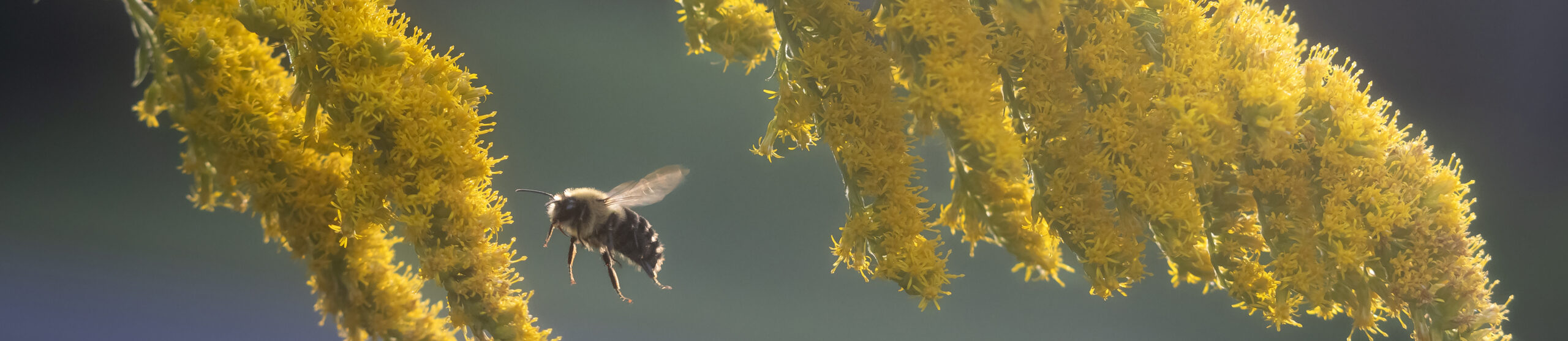


Bees Promote Biodiversity and Human Wellbeing
Bees perform numerous functions
that have ecological, economic,
and even cultural value.
Bees for Biodiversity Proclaim the Glory of God
Following World Bee Day and Biodiversity Days, we reflect on the amazing design of bees.
by Dr. Sarah Buckland-Reynolds
Bees are one of those creatures that can evoke a sense of fear when they fly into a room. I recall as a child, I often dreaded bees, as they would enter a room and would often fly straight to me and sting me (although, when this happened my father would pacify me with a compliment that this happened as “I look like a flower”). Notwithstanding, such experiences can easily lead one to view bees as nuisances. Yet, as I matured and studied their ecological roles, I realized that bees are far from pests. What once symbolized fear now reminds me of their protective instinct and their deeper purpose in creation.
The past week was an opportunity to reflect on the purpose of bees and broader biodiversity, as international days celebrated both topics on May 20 and 22 respectively. In a press release titled: World Bee Day | 20 May ([Food and Agricultural Organization]), May 20, 2026, it was shared that the theme for the 2026 recognition of bees was: “Bee Together for People and the Planet – A Partnership that Sustains Us All”. This year’s theme emphasizes the interconnectedness of pollinators, biodiversity, and human wellbeing in ecological, economic, and cultural functions. Far from being pests, bees are indispensable allies in sustaining life on earth.
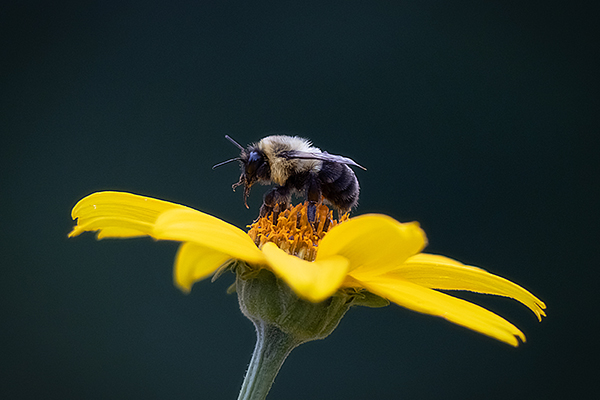
Photo by Jenny Wise.
What’s the Buzz About Bees?
The multifunctionality of bees in ecosystems and society has been documented from ancient texts to modern scientific publications. When examining ecological statistics, for example, bees carrying among the greatest shares of ecological dependency across multiple functions, including, but not limited to:
- Pollination services: FAO reports that three out of four crops worldwide producing fruits or seeds for human food depend, at least in part, on pollinators, with bees being the most important group. 35% of global crop production volume is directly affected by pollinators.
- Biodiversity Support: The Intergovernmental Science-Policy Platform on Biodiversity and Ecosystem Services (IPBES) global assessment found that almost 90% of wild plant species rely on animal pollination, primarily bees.
- Nutrient Cycling: By enabling plant reproduction, bees indirectly support soil fertility, carbon sequestration, and ecosystem resilience. FAO emphasizes that pollinator diversity boosts crop quality and quantity, linking pollination directly to ecological processes like soil health and reduced pesticide use.
- Economic Value: Within the last decade, the IPBES estimates the annual economic value of pollinators at $235–$577 billion globally, Managed honeybees alone produce 1.6 million tonnes of honey annually, while wild pollinators contribute irreplaceable services to agriculture and ecosystems.
The Miracle of Honey
Building on established knowledge of bee functions, scientists continue to discover remarkable functions of bees up to the present day.
 Proteomic and amino acid profiling of monofloral honeys from the Thrace region: insights into composition (Saffet Çelik, Journal of Food Measurement and Characterization (Springer Nature), 23 May 2026), In this recent article, an amazing consistency was found in human-beneficial proteins passed on from bees into honey production, that have been found with immense potential in anti-aging formulations, dietary supplements, and authenticity testing.
Çelik’s work examined proteomic and amino acid profiling of monofloral honeys from the Thrace region, identifying 39 bee-derived proteins, nine of which were consistently present across all honeys, alongside plant-derived proteins and amino acids such as proline.
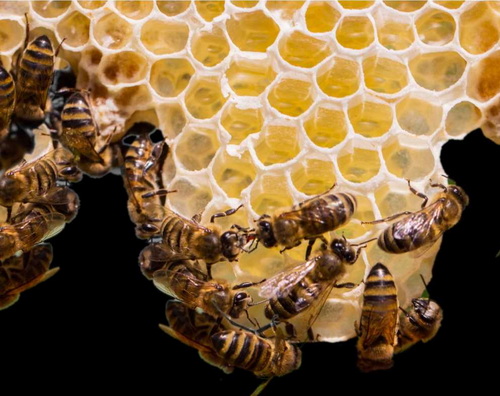
Architects at work: honeybees building honeycomb. Credit: Illustra Media.
Proline was a predominant amino acid found in the honey, but its multiple functions for human health are remarkable. In plants, it functions to regulate stress tolerance in plants and structural stability in proteins. When this is transferred to honey, it produces food with resilience-enhancing properties for humans. This cascade of design, from plant to bee to human benefit, can be interpreted as intentional layering of function.
Another interesting finding from Çelik’s study was the consistency of nine core proteins across various honey types examined, regardless of floral source. This may suggest a core biochemical blueprint in bee physiology, where bees appear to have been equipped with a stable set of proteins that ensure honey retains functional properties regardless of floral source. Among these consistent proteins are phospholipase A1 and carboxylic ester hydrolase, which hydrolyze lipids, enhancing honey’s antimicrobial and cosmetic potential. Such consistency across diverse floral sources points to a system engineered for reliability, ensuring honey remains beneficial regardless of its botanical origin.
Evolutionary Literature Persists but Self-Expose Limits
Despite so much evidence of bees’ design, other articles published in 2026 continue to analyze bees’ functions using evolutionary frameworks. One such article, titled:
The Evolution of Bees: Insights from ‘Omic Studies ([Dova Brenman-Suttner , Amro Zayed], Genomic Biology and Evolution, January 2026). This paper elaborates on four aspects of bee functions that are perceived to be evidence of evolution, but in fact further highlight limitations of the theory. Among the behaviours interpreted through evolutionary lenses are: (1) ‘Eusociality’ of bees (bees’ cooperative social system with a defined reproductive division of labour), (2) alternative splicing, (3) worker castes and (4) Genomic complexity.
In terms of eusociality, the authors assert that “Eusociality … is a major evolutionary transition that has independently evolved multiple times in bees.” This framing assumes repeated, unguided origins of complex social systems, yet no observational evidence exists of solitary bees gradually evolving into eusocial colonies. What is observed are fully functioning caste systems and cooperative brood care already in place. From an intelligent design perspective, eusociality is better understood as a pre-programmed communal architecture, where bees were equipped from the start with the genetic and behavioral systems necessary for colony resilience and efficiency.
Since evolutionists struggle with identifying mechanisms for the development of complex social structures, one of the key mechanisms proposed is ‘alternative splicing’. In their words:
“Alternative splicing, a conserved, posttranscriptional regulatory process, is important for generating phenotypic diversity by producing different isoforms…. This flexibility provides raw material for natural selection to act upon, contributing to the evolutionary diversification of traits, especially in taxa like bees that have evolved to have complex social structures.”
The proposed evolutionary chain in this social development involves the generation of many protein isoforms through splicing, which in turn is thought to create behavioural and developmental diversity, with worker bees, drones and queens emerging from the same genome. They then propose that natural selection acts on that diversity, leading to the emergence of complex social systems.
 From an intelligent design lens, however, what is actually observed is not raw material waiting for selection, but a regulatory toolkit already embedded in bee genomes. Bees’ social structures show foresight and engineering rather than blind trial-and-error.
Interestingly, on this note, the authors admit that: “Darwin considered the ‘neuter’ worker castes of bees a special difficulty for his theory of evolution by natural selection.” This admission underscores the explanatory gap: sterile workers do not fit survival-of-the-fittest logic, since they sacrifice reproduction yet remains essential to colony success. Evolutionary theory struggles here, but intelligent design sees this as evidence of purposeful communal design, where the colony itself is the unit of survival, and sterile workers are integral to the system’s foresightful engineering.
While upholding evolutionary narratives, Brenman-Suttner and Zayed’s publication admit to multilayered regulation in bees. In their words they highlight:
“Regulatory processes including alternative splicing, long non-coding RNAs, microRNAs, and circular RNAs, shape phenotypic plasticity and social behaviour by modulating caste differentiation, reproductive roles, and task specialization.”
However, evolutionary framings of these processes assume these networks arose incrementally, yet what is observed is precision and coordination akin to software coding. Intelligent design interprets these RNA systems as evidence of information-rich programming, pointing to foresight and intentionality rather than random assembly. The sheer complexity of eusociality, magnetoreception, and caste differentiation in bees challenges reductionist explanations.
The irreducible complexity of bee societies, where communication, navigation, and reproduction are interdependent, suggests intentional design. The waggle dance, for example, requires precise integration of sensory input, motor output, and social interpretation. Such systems cannot function if any component is missing, making gradual evolutionary explanations insufficient. Even evolutionary biologists express surprise at the sophistication of bee functions, underscoring the inadequacy of purely materialist accounts.
Biblical Symbolism and Stewardship
With the backdrop of such remarkable functions, it is no wonder that in Scripture, bees and honey symbolize abundance and divine blessing. The Promised Land was described as “flowing with milk and honey” (Exodus 3:8), and honey often represented wisdom and delight (Proverbs 24:13). Bees remind us of diligence, cooperation, and providence. Our role is to steward this creation. Practical steps include planting pollinator-friendly gardens with native flowers and reducing pesticide use and adopting organic practices. In stewarding bees, we affirm our dominion mandate: to harness creation responsibly, to the glory of God, and to sustain both people and the planet.
As we commemorate World Bee Day 2026, let us not only recognize bees as partners between people and pollinators, but ultimately as a remarkable part of creation pointing to the Creator. Bees are indeed symbols of God’s providence, sustaining ecosystems, nourishing humanity, confirming the wisdom of God and challenging simplistic evolutionary narratives.
Recommended Resource: Watch Illustra Media’s short film “Extraordinary Engineers” about honeybees.
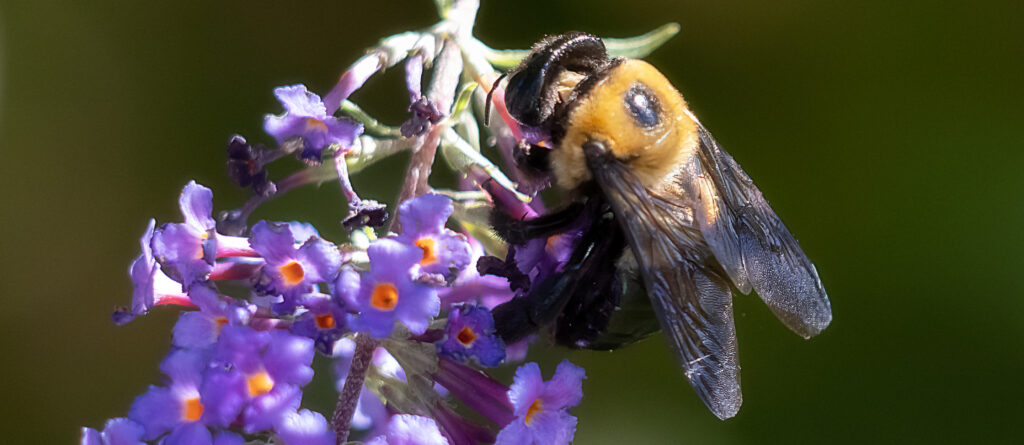
Photo by Jenny Wise
 Dr. Sarah Buckland-Reynolds is a Christian, Jamaican, Environmental Science researcher, and journal associate editor. She holds the degree of Doctor of Philosophy in Geography from the University of the West Indies (UWI), Mona with high commendation, and a postgraduate specialization in Geomatics at the Universidad del Valle, Cali, Colombia. The quality of her research activity in Environmental Science has been recognized by various awards including the 2024 Editor’s Award from the American Meteorological Society for her reviewing service in the Weather, Climate and Society Journal, the 2023 L’Oreal/UNESCO Women in Science Caribbean Award, the 2023 ICETEX International Experts Exchange Award for study in Colombia. and with her PhD research in drought management also being shortlisted in the top 10 globally for the 2023 Allianz Climate Risk Award by Munich Re Insurance, Germany. Motivated by her faith in God and zeal to positively influence society, Dr. Buckland-Reynolds is also the founder and Principal Director of Chosen to G.L.O.W. Ministries, a Jamaican charitable organization which seeks to amplify the Christian voice in the public sphere and equip more youths to know how to defend their faith.