


Nobel Prize for Optogenetics Inspired by Algae
A Nobel Prize-winning discovery reveals
extraordinary engineering in nature and
raises deeper questions about design origins
The Alga That Outengineered Neuroscience
What a Nobel Prize Discovery Reveals About Design
by Dr. Sarah Buckland-Reynolds
Oftentimes in the outdoors, algae are viewed as a nuisance when they grow on rocks, buildings, ponds, aquariums, and other surfaces because they can create slippery conditions, discolour surfaces, and detract from their appearance.
Despite not being considered the most aesthetic of features in the natural world, the 2026 Nobel Prize in Physiology and Medicine has highlighted that these ‘lesser loved’ aspects of our natural world contain some of the greatest technological breakthroughs. Here is an award-winning example.
 Light-seeking algae gave us a switch for nerve cells (Deisseroth, Hegemann & Nagel, The 2026 Nobel Prize in Physiology or Medicine: “for their discoveries concerning light-gated ion channels and optogenetics”, 5 October 2026), novel research has uncovered one of the most revolutionary tools in modern neuroscience: applying how a microscopic alga swims toward light.
Explained further in both a popular science synopsis and a technical paper by the Nobel Prize committee, Deisseroth’s and colleagues’ research discovered how to control specific brain cells using pulses of light, allowing them to switch neurons on and off with astonishing precision. This technology, called optogenetics, has already enabled researchers to activate memories, map complex brain circuits, restore aspects of vision, and explore treatments for neurological disorders – all by copying already-existing capabilities within algae.
Deisseroth, Hegemann and Nagel’s discoveries deserve Nobel-winning celebration. However, it also sheds light on an even deeper question: if engineers rightly receive credit for adapting these systems into medical technologies, what should we conclude about the original system that existed first in nature?
More About Nobel-Winning Light Switches in Living Cells

Chlamydomonoas reinhardtii (Wikimedia Commons)
In explaining the significance of their innovative applications, Deisseroth and colleagues explain how their work was built upon a discovery that a tiny green alga (Chlamydomonas reinhardtii) possesses a remarkable light-sensitive protein called channelrhodopsin. This single molecular machine can detect light and instantly convert that signal into electrical activity by opening a channel through the cell membrane. Further understanding of the functions of this molecular machine led to researchers later introducing this protein into neurons, enabling brain cells to be controlled with pulses of light. The resulting technology, optogenetics, has transformed neuroscience and opened new possibilities for treating blindness, epilepsy, Parkinson’s disease, and other neurological disorders.
One of the most intriguing aspects of this discovery is that neuroscientists had spent decades trying to engineer capabilities that already existed in a microscopic alga. The Nobel Committee noted that neuroscientists needed a method capable of controlling specific neurons with extraordinary speed and precision. Earlier approaches were cumbersome, often requiring multiple proteins, complicated signaling pathways, or external chemicals. Yet within a single-celled organism, scientists discovered precisely what they needed: a single-component molecular device capable of converting light directly into electrical activity.
A Molecular Machine Beyond Human Engineering
At the centre of the discovery is channelrhodopsin: a protein that is embedded in the algal cell membrane. Channelrhodopsin contains retinaldehyde, a molecule capable of absorbing light. The way it functions is that, when light strikes retinaldehyde, it changes shape, and that shape change is transmitted through the protein, causing a tiny channel to open. Positively charged ions then flow through the membrane, generating an electrical signal that directs the movement of the cell.
While the process may sound fairly simple, it represents a highly integrated system in which multiple components must function together in a coordinated sequence. Among the requirements are:
- A light-absorbing molecule (retinal).
- A protein capable of binding and responding to that molecule.
- A membrane-spanning protein that functions as a light-activated ion channel.
- Mechanisms for selective ion transport across the membrane.
- Electrical signaling machinery capable of interpreting the resulting current.
- Behavioural systems able to respond meaningfully to the signal.
Channelrhodopsin is particularly significant because this protein is not merely a receptor. Rather, it functions as both a light receptor and an ion channel, combining light detection and ion transport within a single membrane-spanning protein. If any of the essential components required for this process are absent, the integrated system can no longer function effectively as a lightguided navigation mechanism.
The Surprise to Scientists
One of the most important features of the discovery pertains to the speed of the response found in the mechanisms that algae use. The Nobel Prize popular article traced the search for this speed to the ideas of Francis Crick (co-discoverer of the double-helix structure of DNA). In the words of the article, they mention that:
“One of those who dreamed of more precise tools to explore the brain’s exceptionally complex network of nerve cells was Francis Crick (Nobel Prize 1962). A few decades after the ground breaking discovery of DNA’s double helix in 1953, he began investigating the mechanisms that underlie human consciousness. He envisioned ways to activate individual nerve cells in a living brain. The signals in nerve cells are extremely rapid. To match this speed, he concluded that it would probably be ideal to use light. If molecular biologists could somehow manipulate nerve cells and get them to react to light, they might be able to control neural activity…
Crick admitted that his idea sounded farfetched, but perhaps not impossible to achieve. His vision of the future has now become reality. Karl Deisseroth, Peter Hegemann and Georg Nagel are awarded the 2026 Nobel Prize for their discovery of a molecular switch for nerve cells. Using light, researchers are now able to switch individual neural circuits on or off in the brain. They can bring memories to life, create feelings, drive behaviours and study the types of neurons that are involved in various psychiatric and neurological disorders. Optogenetics is fundamentally transforming our understanding of the brain. It has also provided important insights into how the nervous system interacts with various cells in other areas of the body, such as in the heart and gut.”
Deisseroth and colleagues’ discovery included observing photocurrents with latencies measured in microseconds, vastly faster than would be expected from conventional signaling cascades involving multiple biochemical intermediates. Such speed immediately suggested an elegant design architecture, where, instead of requiring numerous signaling steps, the system linked light detection directly to ion flow through a single protein. In engineering terms, it eliminated unnecessary complexity while achieving significant functionality.
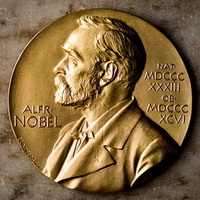 This efficiency is exactly why it became so useful in neuroscience, leading to the award of the 2026 Nobel Prize in Physiology and Medicine. By introducing naturally-occurring channelrhodopsin genes into neurons, Deisseroth enabled cells that responded instantly to light, showing that flashes of blue light could trigger action potentials with millisecond precision.
What is also interesting is that this was viewed as “far-fetched” (although not impossible), by some of the brightest minds in science decades ago. Yet while scientists struggled to imagine how such a system could be built, a microscopic alga had been using a version of this strategy all along.
This raises an important observation: When engineers later adapted channelrhodopsin for use in mammals, no one claimed that the resulting technology emerged without intelligence. Rather, the efforts that required years of expertise, careful design, molecular engineering, genetic manipulation, and testing were thought worthy of a Nobel Prize!
But if the adaptation required intelligence, what about the original system?
Questions for Darwinian Evolution
From a creation science perspective, discoveries such as channelrhodopsin raise profound questions, as evolutionary explanations typically propose that complex biological systems emerge gradually through numerous small, unguided modifications. Yet channelrhodopsin operates as an integrated system whose effectiveness depends on multiple coordinated components.
The case of channelrhodopsin raises specific questions to evolutionary explanations, such as:

- How did the electrical signals become integrated into cellular navigation systems?
- How did all the components involved in these processes arise in complementary forms at the same time?
- What selective advantage would intermediate stages provide if the complete light-guided response were not yet operational?
Another challenge with evolutionary explanations is not merely explaining the existence of a protein; rather also explains the origin of a highly coordinated information-processing system that couples physics, chemistry, electrical signaling, and behavioural control.
Upon reading the Nobel prize descriptions, the scientific review repeatedly describes the need for specific design requirements in engineered systems, emphasizing the necessity for genetic encodability, membrane expression, reversibility, fast kinetics, direct current generation, and temporal precision. Interestingly, the algal system already possessed these characteristics and functionality before scientists recognized their value.
Nature Inspires Technology Again
One of the key features of this Prize is the numerous practical benefits linked to this discovery. The field of optogenetics (based on the “phototactic behaviour of algae” has enabled scientists to activate specific memories, identify neural circuits controlling wakefulness, study fear, anxiety, reward, and motivation, investigate movement disorders, restore aspects of vision in patients with retinal degeneration and explore new treatments for neurological diseases.
In one experiment linked with this field demonstrated that activating specific neurons associated with a memory could cause mice to behave as though they remembered an earlier fearful event.
Researchers have even restored partial visual function in blind patients using optogenetic therapies. The Nobel review describes a patient with retinitis pigmentosa who regained the ability to distinguish objects after light-sensitive proteins were introduced into retinal cells.
While the Nobel Prize celebrates human ingenuity, it is worth remembering that all these breakthroughs trace back to a microscopic green alga and a molecular machine already operating there, as channelrhodopsin was never their invention, rather a discovery that led to alternative applications.
Following the Evidence Where It Leads
The 2026 Nobel Prize highlights a recurring theme in nature where complex functional information, coding systems, integrated machinery, information-processing networks, and highly coordinated engineering solutions are harnessed to societal good. As the Nobel Prize committee awards the ingenious applications designed by these scientists, it is equally important that we do not ignore that the origin of these technologies also require a Designer. The same evidence that leads scientists to admire the engineering elegance of channelrhodopsin can also be viewed as evidence of purposeful design in nature itself.
The Bible is full of declarations acknowledging God’s marvelous designs. As is frequently quoted from Psalm 139:14, King David wrote:
“I will praise thee; for I am fearfully and wonderfully made: marvelous are thy works; and that my soul knoweth right well” (Psalm 139:14).
Even the humble single-celled alga invisible to the unaided eye contains marvelous, Nobel Prizeworthy works, including a molecular device that continues to transform neuroscience. If God can programme algae to transform lives, how much more is He able to use us for great purposes!
 Dr. Sarah Buckland-Reynolds is a Christian, Jamaican, Environmental Science researcher, and journal associate editor. She holds the degree of Doctor of Philosophy in Geography from the University of the West Indies (UWI), Mona with high commendation, and a postgraduate specialization in Geomatics at the Universidad del Valle, Cali, Colombia. The quality of her research activity in Environmental Science has been recognized by various awards including the 2024 Editor’s Award from the American Meteorological Society for her reviewing service in the Weather, Climate and Society Journal, the 2023 L’Oreal/UNESCO Women in Science Caribbean Award, the 2023 ICETEX International Experts Exchange Award for study in Colombia. and with her PhD research in drought management also being shortlisted in the top 10 globally for the 2023 Allianz Climate Risk Award by Munich Re Insurance, Germany. Motivated by her faith in God and zeal to positively influence society, Dr. Buckland-Reynolds is also the founder and Principal Director of Chosen to G.L.O.W. Ministries, a Jamaican charitable organization which seeks to amplify the Christian voice in the public sphere and equip more youths to know how to defend their faith.