


New Evolutionary Take on Bipedalism Can’t Get Its Feet on the Ground
New chimp study upends long-held
evolutionary ‘Savannah Hypothesis’
Bipedalism in the Trees?
New Chimp Study Upends Long-Held Evolutionary Story
by John D. Wise, PhD

Marx, Darwin and Freud read from the same script written by Hegel. (ChatGPT)
In a follow-up to our Darwine and Chips article, we look today at another “evolutionary upset,” following the pattern that David Coppedge discussed in his recent article. I want to claim that the never-ending stream of cheerfully embraced “upsets” is evidence for my thesis of Hegelian reasoning underlying the whole framework of modern secular science – the idea of the upward progress of reason constantly reforming itself, leaving behind the darkness of “old” thinking. Knowledge, Plato told us, ought to be stable and unchanging. “Evolutionary science,” following Plato, is anything but. It is, rather, an oxymoron, as this article demonstrates. Rather than being embarrassed at an unstable series of narrative steps – of getting it wrong – each new upset (I read “Hegelian” aufhebung or sublation – the “synthesis” moment in the dialectic) is proclaimed a triumph for “self-correcting” science.
But what, other than another story to be overthrown, is it correcting itself to?
For decades, the textbook narrative for human bipedalism has been the Savannah hypothesis. Our ape-like ancestors descended from the trees and began walking upright on the open African grasslands, setting our hands free for tool use. This grand tale – presented to me as settled science – claimed that a warming climate forced early hominids out of their forest homes.
Climate alarmism, it seems, has a long history. One wonders if perhaps some young chimp said something like, “how daaaare you?” to their arboreal forebears.
“Now, a new study suggests …” (yawn … if only I had $1 for every time this was written in the popular science press) a wrench has been thrown into this long-cherished paradigm. The research, which observed chimpanzees in Tanzania’s Issa Valley, suggests that bipedalism may have evolved not on the ground, but in the trees.
Humans Didn’t Evolve Two Legs to Run, Scientists Say—They Just Wanted Some Mangos. (5 August 2025 in Popular Mechanics.). The article begins, “Some scientists believe humans became bipedal to adapt to climate change, but our closest primate ancestors complicate that picture.”
Scientists found that these chimps, living in an ecosystem similar to what supposedly existed millions of years ago, frequently stood on two legs in the canopy. Their purpose? To balance on branches and reach prized food sources like fruits and seeds. According to Rhianna Drummond-Clarke, the lead author,
“It was assumed that bipedalism arose because we came down from the trees and needed to walk across an open savannah. Here we show that…adaptations to arboreal, rather than terrestrial, living may have been key in shaping the early evolution of the human lineage.“

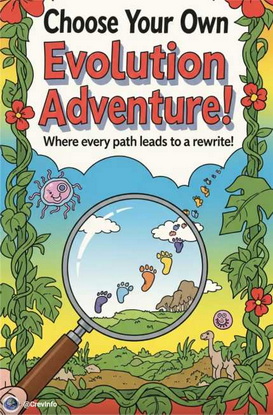
This new theory completely contradicts the long-held “Savannah hypothesis.” It’s yet another example of how the evolutionary timeline and storyline is in a constant state of flux, with fundamental aspects of the human story being rewritten to “fit” new evidence. It is precisely the sort of retrospective storytelling that characterizes Hegelian history.
Actually, having observed chimpanzees myself in various programming through the years and in zoos, I have to wonder why it took so long to propose this explanation? It seems to be the case that chimpanzees are marvelously adapted to living in trees and the occasional foray on the ground, and that bipedalism in both these cases is advantageous … almost like they were designed for such environments. And … as a child the arboreal joy of my neighbor’s tall pine tree revealed to me the advantage of two legs for climbing in addition to walking.
 The Shaky Foundation of Bipedalism
So … while Big Science Media portrays this as an advancement to the evolutionary narrative based on “new evidence,” it is as shaky as the Savannah hypothesis. Does the data suggest that bipedalism, or for that matter any limbs evolved? No … we find these things in the world today, and we find them in the fossil record fully-formed. Why, then is it illegitimate to ask the question, did they evolve? The authors of the study themselves admit to significant limitations:
- The findings are based on a single population of chimpanzees.
- The behavioral observations were conducted only during the dry season.
- The fossil record from the time bipedalism supposedly began is “incomplete.”
 Evolutionary scientists are effectively building an entirely new theory of bipedalism on the behavior of a few apes, observed for a limited time, and then projecting that behavior millions of years into an unknown past. This is a common pattern: new data appears, the old theory is discarded, and a new one is quickly constructed, all while the foundational gaps in the fossil record and the lack of a clear evolutionary pathway remain, and remain the elephants in the room.
The fact that the origin of something as central to human identity as walking upright is still so hotly debated – and constantly being revised – should give pause to those who present evolution as an undisputed fact. This new “arboreal bipedalism” theory simply trades one set of assumptions for another, further highlighting the deep uncertainties at the heart of the Darwinian narrative.
Let’s raise a glass of Darwine – may the theory, like so many of its stories, stagger into irrelevance.
 John Wise received his PhD in philosophy from the University of CA, Irvine in 2004. His dissertation was titled Sartre’s Phenomenological Ontology and the German Idealist Tradition. His area of specialization is 19th to early 20th century continental philosophy.
He tells the story of his 25-year odyssey from atheism to Christianity in the book, Through the Looking Glass: The Imploding of an Atheist Professor’s Worldview (available on Amazon). Since his return to Christ, his research interests include developing a Christian (YEC) philosophy of science and the integration of all human knowledge with God’s word.
He has taught philosophy for the University of CA, Irvine, East Stroudsburg University of PA, Grand Canyon University, American Intercontinental University, and Ashford University. He currently teaches online for the University of Arizona, Global Campus, and is a member of the Heterodox Academy. He and his wife Jenny are known online as The Christian Atheist with a podcast of that name, in addition to a YouTube channel: John and Jenny Wise.