


Beetles and Elderberries Show a Beautiful Symbiotic Balance
A delicate partnership between
elderberries and beetles is described
that balances the needs of both organisms
by Dr. Sarah Buckland-Reynolds
Walking into your garden and spotting fallen fruit is often a disappointment. We assume it signals waste or a poor harvest. But what if those fallen fruits were not failures at all? What if they are part of a larger strategy; one that protects both the plant and the creatures that rely on it?
Recent research in Japan on the symbiotic relationship between Heterhelus beetles and elderberries (Sambucus sieboldiana) suggests exactly that: what appears to be loss may actually be part of a carefully balanced system, turning apparent waste into wisdom.
 The shared benefits of fallen fruits: A novel mechanism stabilizing a nursery pollination mutualism between Sambucus and kateretid beetles (Kawashima et al., Plants, People, Planet, 5 March 2026).
In this paper, Japanese researchers Suzu Kawashima and colleagues from Kobe University describe a surprising ecological partnership.
At first glance, the relationship appears contradictory: beetles pollinate elderberry flowers, but they also lay eggs inside developing fruits, where their larvae consume seeds the plant needs for reproduction. Yet, instead of collapsing, the scientists found that the system stabilizes through a remarkable compromise: the plant sheds some of its fruit, enabling benefits for both the plant and the beetles.
In describing their findings, the researchers emphasized the profound precision of this symbiotic dynamic, stating the following:
“We found that the plant depends largely on Heterhelus for pollination and sheds most infested fruits before they ripen, which likely redirects plant resources to healthier fruits, while the fallen fruits still shelter larvae until they complete development.”
This discovery invites us to rethink what we often dismiss as waste. Could these patterns of cooperation be the result of blind undirected evolutionary processes, or do they point to a deeper design woven into creation?
Explaining Mutualism: An Evolutionary Standpoint
Kawashima and colleagues mention the term ‘mutualism’ at least 34 times in their article, emphasizing the collaborative nature of the interaction and its shared benefits for the species involved. According to the evolutionary narrative, mutualism can be explained as the result of natural selection favouring traits that increase reproductive success. It is posited that, if cooperation enhances survival or reproduction for both partners, mutualism can evolve.
This evolutionary perspective is also reflected in the authors’ references to evolution, which appear approximately four times throughout the article, including in their discussion of the proposed origin of insect pollination:
“Insect pollination has often been proposed to evolve repeatedly from antagonistic interactions in which insects initially exploited flowers as oviposition or mating sites.”
The evolutionary framework was also used in their call for further research across ecological contexts:
“Comparative studies incorporating ancestral state reconstruction and broader pollination ecology across multiple Sambucus species, ideally including intraspecific variation, will be essential for clarifying the evolutionary dynamics of this nursery pollination mutualism.”
They again invoked evolutionary explanations in attempting to address the challenge of how such mutualism could be sustained over tens of millions of years:
“Because mutualisms inherently involve both benefits and costs, identifying mechanisms that balance these opposing forces is central to understanding their evolutionary stability …. Given the probable persistence of this association over tens of millions of years, we suggest that this abortion-mediated compromise represents an evolutionarily stable strategy that buffers the mutualism against environmental fluctuations…”
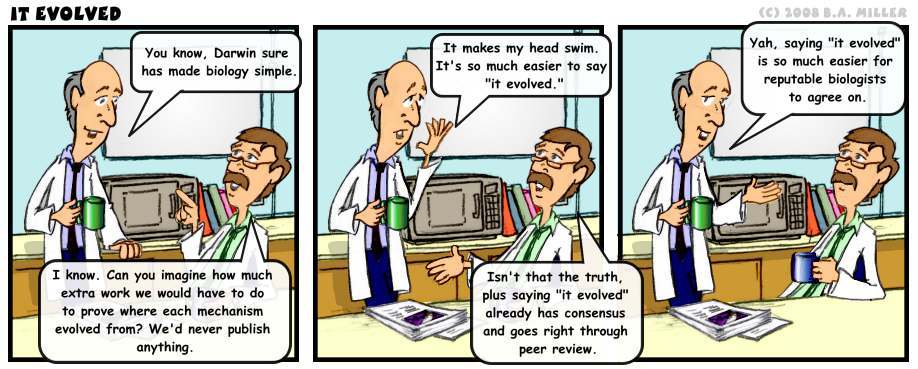
Problems with the Evolutionary Assumption
Despite this persistence in the application of the evolutionary framework, closer examination shows that Darwinian explanations struggle to account for the stability of such relationships, given the constant risk of cheating and exploitation in the natural environment. Sustaining such systems over evolutionary timescales may require additional assumptions or mechanisms to address these challenges:
- The problem of cheating: Such interactions would collapse if exploitation took place, where one partner takes benefits without giving back. Evolutionary theory struggles to account for why cheating does not become the dominant outcome in mutualistic interactions.
- Stability Concerns: Evolutionary theory must account for how many mutualisms persist over millions of years. Yet evolutionary processes such as random mutation and selection alone cannot explain such long-term stability without additional stabilizing mechanisms.
- Complex Coordination: Mutualisms often require highly specific behaviours (e.g., larvae entering only fertilized ovules, or plants shedding fruit to balance costs). The emergence of such coordination through incremental evolutionary processes is difficult to explain.
- Context Dependence: Mutualism outcomes vary with environmental conditions. In some cases, the same interaction may shift from beneficial to harmful. Accounting for such flexibility within undirected evolutionary processes presents yet another challenge.
Why Beetle-Elderberry Mutualism is Remarkable
The partnership between Heterhelus beetles and Japanese red elder (Sambucus sieboldiana) is remarkable because it transforms what could easily be a conflict into cooperation. At first glance, the beetles seem to exploit the plant by feeding on its pollen, laying eggs in its ovaries, and leaving their larvae to feed on developing seeds. Yet the elderberry plants are unable to reproduce without insect visitation.
Kawashima found that these potential conflicts were overcome by a series of steps that involved precision on several levels:
- Elderberries entirely depend on insect pollination and their needs are met: In the authors’ words:
“Inflorescences without insect access produced no fruits… confirming strong self-incompatibility” (Section 3.2).
Such a level of dependence is risky for survival, yet adult Heterhelus beetles fulfil this need.
- Egg-laying and larval entry must be precise: After mating, female beetles lay eggs on young ovaries. According to the results, the larvae that hatch show remarkable precision, preferentially entering fertilized ovules rather than unfertilized ones. This ensures they have access to developing seeds for nourishment. As the authors note:
“Larvae preferentially enter ovaries containing fertilized ovules and consume developing seeds”
This behaviour requires sensory mechanisms aligned with the plant’s reproductive status, which in turn requires a level of coordination that challenges the idea of random evolutionary trial and error.
- Strategic Fruit Shedding by the Elderberries: Once larvae are inside, the plant responds by shedding most infested fruits before they ripen. The rationing of fruit resources is so strategic that the authors describe it in the following economic terms:
“Fruit shedding likely functions as a cost-mitigation strategy that limits maternal investment”
By discarding compromised fruits, the plant redirects resources to healthier ones, ensuring that some seeds survive and mature.
- Conditions that allow the full developmental cycle, ensuring larval survival in shed fruits: The mutualism between elderberries and beetles provides an instructive case study. In many systems, fruit shedding spells death for larvae. However, in this case, the larvae survive and complete their development inside the shed fruit. The fallen fruit then allows them to exit into the soil to pupate. The researchers describe this observation contrasting the expected probabilities of survival under the circumstances with the outcomes actually observed in the following way:
“Despite the substantially reduced germinability of seeds in infested fruits, fruit shedding… allows larvae to complete development in the shed fruits”
With beetle-elderberry mutualism involves a series of stepwise and highly precise conditions, suggesting a finely tuned system that could collapse if any step were missing. From an evolutionary standpoint, these observations raise several important questions:
- How could such a fragile partnership arise through blind incremental trial and error processes?
- Can random mutations and natural selection truly account for such intricate timing, coordination, and mutual benefit?
- If evolution is driven primarily by survival of the fittest, how do we account for the persistence of cooperation rather than collapse?
So remarkable are these observations that, despite appealing to evolutionary explanations, the researchers themselves describe the system as a “finely balanced compromise”.
The Kobe University study shows yet another example of an amazing mutualistic relationship that defies many evolutionary assumptions. At every stage of the process: pollination, fruit shedding, and larval survival, each element forms part of a coherent system that defies reduction to chance alone.
The Lesson of Hidden Providence in Even Fallen Fruit
As we reflect on this remarkable discovery, we are invited to consider that our Creator’s providence sometimes appears in forms the world would regard as wasteful. Yet nature shows us that even in the shed fruit we can see the fingerprints of a Designer who sustains life through patterns of cooperation, balance, and hidden grace.
Romans 1:20 reminds us:
“For since the creation of the world God’s invisible qualities, his eternal power and divine nature, have been clearly seen, being understood from what has been made.”
Let us continue to trust the beautiful providence of our Creator to sustain us through whatever circumstances we face.
 Dr. Sarah Buckland-Reynolds is a Christian, Jamaican, Environmental Science researcher, and journal associate editor. She holds the degree of Doctor of Philosophy in Geography from the University of the West Indies (UWI), Mona with high commendation, and a postgraduate specialization in Geomatics at the Universidad del Valle, Cali, Colombia. The quality of her research activity in Environmental Science has been recognized by various awards including the 2024 Editor’s Award from the American Meteorological Society for her reviewing service in the Weather, Climate and Society Journal, the 2023 L’Oreal/UNESCO Women in Science Caribbean Award, the 2023 ICETEX International Experts Exchange Award for study in Colombia. and with her PhD research in drought management also being shortlisted in the top 10 globally for the 2023 Allianz Climate Risk Award by Munich Re Insurance, Germany. Motivated by her faith in God and zeal to positively influence society, Dr. Buckland-Reynolds is also the founder and Principal Director of Chosen to G.L.O.W. Ministries, a Jamaican charitable organization which seeks to amplify the Christian voice in the public sphere and equip more youths to know how to defend their faith.
Comments
Evolutionists’ god of the gaps = “it evolved”