


Darwin-Drunk Media Competes for Stupid Awards
An otherwise good week of science
was corrupted by silly stories glori-
fying Darwin’s Stuff Happens Law
At CEH, we love good science. Unfortunately, finding it is like searching through a junkyard for good auto parts. Big Science and their accomplices in Big Science Media pollute the good name of science with ridiculous speculations about how complex systems “emerged” on their own by blind, unguided processes. Take a look at this week’s losers, the contenders for Stupid Evolution Quote of the Week. Vote for your winner (i.e., the best loser).
 Carrion helps us understand ecology, epidemics and human evolution (CENIEH, 29 July 2026). The Spaniards have bigger things to worry about than to carrion like this. What are they trying to do, tell comedy jokes about the Roadkill Cafe?
Carrion ecology offers new tools for interpreting archaeological sites and the fossil record, understanding animal evolution and reassessing certain hypotheses about meat consumption among early humans.
No less than 39 Darwinians participated in this storytelling event, without watching a single hominid eat roadkill. Word has it that some of the participants weren’t able to take all their roadkill on the plane to the conference, because passengers are only allowed two carrions.
The study, published in the journal Biological Reviews and carried out by an international team of 39 researchers affiliated with scientific institutions in 11 countries, synthesises more than 20 years of advances in carrion ecology. The authors examine what science gains by incorporating carrion into the way we interpret nature, from individual animal behaviour to ecosystem functioning and human evolution itself.
Studying scavenger behavior is legit for scientists. Assuming that it gives “understanding” about animal evolution or human evolution is not. For good science, watch Illustra’s video, The Cleansing Breeze, about birds that are well designed to eat dead meat.
Oil Droplets Remodel Themselves, Swallow Their Surroundings Like Living Cells (New York University, 29 July 2026). Caught in the act! These “scientists” were blowing soap bubbles on company time, and rationalizing it on the grounds that it helps them “understand” biology.
Using oil droplets, water, and soap-like molecules, scientists reveal how chemistry and physics alone can recreate hallmarks of cell biology.

New technique pinpoints human DNA inherited from ‘ghost’ ancestors (UC Berkeley, 30 July 2026). Berserkeley keeps living up to its name as long as it hires Darwinian racists.
Two mysterious human relatives left their genetic footprints in the modern human genome alongside the DNA of Neanderthals and Denisovans, underscoring the fact that our ancestors interbred with many groups of hominins they encountered over millions of years of evolution.
They wouldn’t be having to link these ancestral lineages if they hadn’t split them in the first place. Despite all the evidence of human beings interbreeding with each other, Darwinians continue to call some humans names (Neanderthal: a long-recognized insult). Guess how many of these scientists personally witnessed millions of years.
Researchers uncover clues to how parenting behavior evolved in ants (Rockefeller University, 8 July 2026). Here’s the upshot of a new evolutionary theory about parenting: hunger drove them to it.
Long before the dawn of modern parenting, animals laid eggs and moved on, leaving their progeny to fend for themselves. Now, a study published in Nature uncovers one of the elegant ways that evolution transformed neglect into nurture. Working in clonal raider ants, a surprisingly parental insect, researchers found that, rather than evolving entirely new brain circuits for caregiving, evolution repurposed ancient neural systems for regulating hunger into triggers for social behaviors.
And so, kiddos, most parents ate their offspring. But a tiny few of them, over millions and millions of years, had a chance mutation that made those parents love their offspring, and that’s why your parents didn’t eat you.
AI tool reveals climate shifts may have fueled bursts of bird evolution (New York University, 20 July 2026). These guys scored two brownie points for NYU: mentioning evolution and climate change in the same project. But do they get demerits for using AI? Even if they do, they get more brownie points for spinning a problem into a benefit: using evidence for abrupt appearance into an argument for Darwinism. Didn’t Darwin teach that things evolved gradually bit by bit? Well, yes, but he also meandered away from natural selection in later life and became more Lamarckian himself. As the Father of the Stuff Happens Law, he couldn’t fault his disciples for doing it too.
“This is really important for evolutionary theory because there’s a long history, going back 100 years, that predicts the emergence of new groups, called evolutionary radiations, is often associated with an explosive burst of diversification. Evolutionary theory predicts that adaptive radiations may account for a large portion of the diversity of life on earth,” said Jake Berv, lead author of the study and postdoctoral fellow in the U-M School for Environment and Sustainability.
“This could be because of a new ecological opportunity, or it could be because a group dispersed to a new continent, resulting in dramatic accelerations in their rate of evolution. The idea is that, over time, there’s less opportunity as evolution proceeds, and so it slows down, and that this occurs in pulses across time. That’s what theory predicts, and that seems to be what we see in the data as well.”

A snake oil salesman could hardly do better. The snake oil heals instantly except when it causes chronic stomach pains. Both are evidence that it is working just fine!
Cretaceous Beetle Fossil Reveals Early Evolution of Firefly Sensory and Signaling Systems (Chinese Academy of Sciences, 31 July 2026). How did the scientists figure out this was a firefly? It had light sensing and signaling systems.
Scientists have discovered a remarkably well-preserved 100-million-year-old beetle fossil that provides a rare glimpse into the evolution of the intricate sensory and communication systems used by fireflies and their relatives today. Fireflies belong to the order Coleoptera, which includes all beetles.
This fossil specimen preserves both elaborate antennae and fully intact abdominal light-emitting organs. The presence of these two features in a single fossil provides pivotal evidence for reconstructing the early evolution of sensory and signaling systems in fireflies and their close relatives.
But wait; it was already a firefly. How does that reveal the early evolution of fireflies? Answer: Darwin must be praised at all costs.
If this adds to your depression, you can watch Illustra Media raise your awe about the design in fireflies instead.
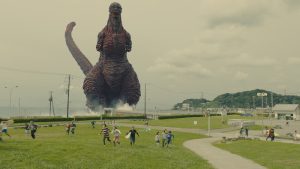 What Godzilla can teach us about Donald Trump (Phys.org, 29 July 2026). Phys.org used to be a good junkyard to browse for intact pieces of science news, but lately it has gone off the rails. This stupid headline, comparing the USA’s most popular president in years to a monster stomping on everything, suggests that its owners and editors have become fatally afflicted with TDS in addition to Darwine addiction. Sad. And now Phys.org expects its readers to pay for the privilege of reading press releases it gathers from universities and labs under penalty of forcing them to watch ads before they can see all the open source material they republish. Stick with CEH. It’s free.
Updating Darwin: biologists are returning to an older theory to explain anomalies in evolution (The Conversation, 29 July 2026). What do you mean Lamarckism is back? You Darwinists have been telling us for 160 years that Darwin had a better mechanism than Lamarck. Now you’re saying Darwin was wrong?
Does this mean Darwinism is wrong? No, it doesn’t. Natural selection still accurately explains evolutionary processes a large proportion of the time. But as I argue in my new book, The Selective Organism: an Expanded Theory of Adaptive Evolution, we could see Lamarckian acquisition of traits as a second driver of evolution, acting alongside natural selection.
Professor Pim Edelaar at Lund University wants it both ways. He wants two drivers driving the car. But what if they fight? What if the Lamarck driver wants a giraffe neck fast, and the Darwin driver says to wait and let Stuff Happen?
Edelaar points to new findings about epigenetics to make his pitch. We suggest, instead, you read Dr Thomas Woodward’s latest book (co-authored by James P. Gills, MD), Epigenetics and the Architect. From their intelligent design position, you will learn to stand in awe of the wonders in the cell and inside your body. That’s good therapy for headache caused by prolonged exposure to Darwinian storytelling.