


Why the Human Genome Project Failed to Deliver Promised Cures
Over and again, evolutionary biology builds
elegant theoretical narratives on uncalibrated
assumptions, treats the resulting story as settled
dogma, and only checks the math decades later
when empirical reality refuses to cooperate.
The Faulty Map That Refused to be Corrected
When Biology’s Emissary Became the Master
by John D. Wise, PhD
A quarter of a century after the Human Genome Project promised sweeping genetic cures for cancer, Alzheimer’s, schizophrenia, and heart disease by 2010, those cures have not arrived.
 We’ve got biology wrong, and that’s why the Human Genome Project failed, (IAI News, 12 November 2026). In a remarkably candid essay for the Institute of Art and Ideas, Oxford emeritus physiologist Denis Noble, UCL’s Raymond Noble, and biochemist Reine Bourret offer a blunt post-mortem on modern biology’s biggest unmet promise:
The Human Genome Project promised genetic-based cures for all the major diseases of mankind, from cancer, to Alzheimer, to schizophrenia. A quarter of a century later, and these sweeping cures haven’t materialized. Biologist Denis Noble and his co-authors Raymond Noble and Reine Bourret argue that this failure reveals a flawed foundation in modern biology: treating genes as the system’s controllers rather than its tools. For 60 years this central dogma has mislead biology.
For observers tracking philosophy of science, this confession exposes a deeper pattern. Over and again, evolutionary biology builds elegant theoretical narratives on uncalibrated assumptions, treats the resulting story as settled dogma, and only checks the math decades later when empirical reality refuses to cooperate.
When the Map Usurps the Territory
In The Master and His Emissary, psychiatrist and philosopher Iain McGilchrist describes how the analytical left hemisphere functions as the subordinate emissary of the brain, excelling at isolating parts, drawing linear maps, and constructing tidy mechanical models. When the right hemisphere, the Master, and the left hemisphere coordinate properly, they produce a holistic, balanced, and reality-centered picture. Problems arise, however, when the emissary forgets its subordinate role, mistakes its simplified map for the living territory, and confidently declares itself the Master.
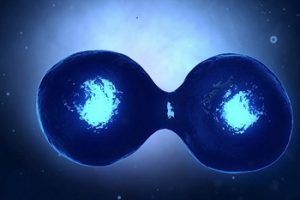 That is precisely what happened in twentieth-century biology. Noble and his co-authors trace the coup step by step: from Erwin Schrödinger’s 1944 suggestion that genetic material self-replicates “like a crystal,” through Francis Crick’s one-way Central Dogma (DNA → RNA → Protein), to Julian Huxley’s 1963 Modern Synthesis, which severed evolutionary theory from realistic physiology.[1] Richard Dawkins delivered the coup d’etat in The Selfish Gene, declaring that DNA replicates automatically and that genes “created us, body and mind.”
A useful diagram of one linear chemical pathway had been crowned sovereign over the entire organism. As Noble notes,
There was no room for living cells themselves to orchestrate DNA replication.
Living creatures were demoted to passive survival machines, while an inert string of nucleotides sat on the throne.
In effect, we are our genome.
Uncalibrated Assumptions Meet Empirical Reality
In an earlier essay for Creation-Evolution Headlines, “Reality Corrects Evolutionary Tales”, I examined how paleontologists trusted computerized morphometric software for decades without ever calibrating their digital ruler against living species, just as anthropologists spent sixty years defending an obstetrical dilemma before anyone checked the actual pelvic biomechanics.
Molecular biology fell into the same trap. Noble drops a stunning admission about the crown jewel of genetic determinism:
The reason for that failure is that an important test of the self-replication idea had not been performed. No one had checked whether chemical self-replication really works with the accuracy needed by living cells. That happened in 2012 when Rebecca Schulman at Johns Hopkins University let DNA self-replicate in purely chemical conditions.
Unassisted chemical replication yielded an average of one error per 4,000 base pairs. That error rate might suffice for a tiny virus, but human genomes contain three billion base pairs. Left to blind crystal-like chemistry, human cells would drown in thousands of lethal mutations every division. But …
living cells must pass a stringent test before allowing themselves to form two new cells. The criterion is no more than one error in 10 billion bases!
Between divisions, the cell harnesses controlled variation (such as generating diverse antibodies in the immune system) and then dispatches legions of enzymatic proofreaders to crawl along the DNA threads and restore near-perfection before mitosis.
Even Crick’s one-way arrow has been shattered. Noble highlights recent bacterial research on the defense enzyme DRT3b, which synthesizes a single-stranded non-random DNA sequence (CACACA…) without reading any DNA or RNA template. Instead, the three-dimensional physical geometry of the protein itself acts as the mold, authoring custom DNA that halts bacterial growth and triggers altruistic cellular dormancy to save the colony from viral invasion. Information flows from protein architecture to genetic code, turning the Central Dogma upside down!
The Weismann Myth and the Return of Agency
To keep genes on the throne, Neo-Darwinism required a wall blocking the living organism from speaking back to its own germline. That wall was the 1883 Weismann Barrier. Noble’s verdict on this pillar of evolutionary orthodoxy is devastating:
… no evidence has ever shown a barrier preventing characteristics acquired by the body from passing between generations. Instead, scientists introduced this barrier as a convenient assumption that, regrettably, became entrenched in twentieth-century thinking. Science needed a scapegoat, so it chose Lamarck. [emphasis mine]
Like Natural Selection itself, the Weismann Barrier functioned as an unproven philosophical dogma designed to strip organisms of internal agency. As Noble observes, the Modern Synthesis
… presented this idea not as a theoretical construct but as an unbreakable law, [reducing living creatures to passive] bystanders rather than active players.
Notice the irony in Noble’s lament that
As schoolchildren, we learned to ridicule Lamarck, rather than understand his ideas.
Big Evo routinely polices its boundaries not with empirical refutation, but with caricature, ridicule and arbitrary-boundary enforcement, tactics familiar to anyone who has ever questioned materialist orthodoxy.
Now, empirical reality is forcing a retreat. Noble points to “abundant evidence” of cross-generational epigenetics and “physiological selection,” where organisms transmit reversible, targeted regulatory patterns
… in anticipation of the habitat into which offspring are born.
From collared doves rapidly expanding their range and Emerald damselflies switching to underwater egg-laying, to Tibetan, Andean, and Ethiopian human populations deploying three distinct epigenetic methylation strategies to thrive at high altitudes, living systems actively sense, track, and respond to their environments.[2]
Inverting the Arrow Does Not Solve the Mystery
Noble, Noble, and Bourret deserve credit for dismantling Dawkins’ genetic determinism and restoring organic agency to biology. Yet their essay ends with a profound philosophical blind spot.
When Karl Marx boasted that he had stood Hegel’s idealism right side up by replacing Mind (Geist) with material economic forces, he kept Hegel’s teleological engine and dialectical logic intact; he simply smuggled the intentionality inside matter, and then denied its reality. Noble performs a similar inversion for biology. Having deposed the selfish gene, he places the cell’s “functional physiological networks” at the top of the diagram and credits them with harnessing stochasticity, orchestrating proofreading, and adapting in anticipation of future habitats.
Dawkins’s Blind Watchmaker is not only blind, but cannot know or care what happens.
But look at the language Noble relies upon to make his model work: “orchestrate,” “harness,” “anticipate,” “strategies,” and an “exploratory process that exploits opportunities.” These are the hallmarks of goal-directed engineering and mind. Invert external selection to internal selection: problem solved?
Noble ends on a hopeful revisionary note:
… such [epigenetic] adaptation may also then become incorporated into the genome itself. This is evolution as a physiological process: adaptation across generations… Epigenetics, coupled with niche partitioning, are key ingredients of adaptation across generations, and they could explain how new variants may become sufficiently reproductively isolated to be considered a new species. This cross-generational change may play a pivotal role in evolution, answering Darwin’s original question: how do species evolve?
Tacitly, this is an admission of the theory’s failure. Attempting to explain “Darwin’s original question” by pointing to pre-programmed epigenetic plasticity and reproductive isolation conflates running the software with writing the code. Showing that Tibetan and Andean humans activate built-in methylation pathways for thin air does not explain how a genome acquired three distinct, fault-tolerant low-oxygen subroutines in the first place.
For creationists and design theorists, there is a vital cautionary lesson here. The collapse of Neo-Darwinian reductionism and “externalism” does not mean secular science will surrender to a Creator. As mechanical materialism fails in the face of biological complexity, evolutionary thinkers are already pivoting toward an immanent, panpsychist view of nature that treats the cell “as if” it was an autonomous, self-engineering mind. Read, for instance, this revealing interview that tracks the trajectory we’ve followed here at CEH:
Michael Levin: Memory and intelligence do not require a brain: Genes and evolution can’t explain life’s behaviour (IAI News, 4 November 2026).
… one of the big questions is: okay, you have that hardware, and … some of that molecular hardware underlies memory and learning and problem solving … The question is, where else might it be found? This notion that it’s only to be found in the brain is just an assumption, not an established scientific fact. My group applies the tools of cognitive and behavioral science … and we’ve found memory and learning capacity in cells and tissues. This opens up all kinds of novel ways to communicate with the living material to try to get it to do things that we don’t know how to micromanage it to do.
If you know what to look for, Levin, Noble, the “Third Way,” and evo-devo bear an uncanny resemblance to panpsychism and Hegelian absolute idealism. Levin himself openly invokes Plato to explain the non-physical “patterns” that guide cellular hardware. Yet immanent mind without a transcendent Maker merely turns nature into its own self-programming deity. There is a far better answer.
One Inversion Demands Another
Biology’s emissary is being forced by reality to bow to reality. Flipping the causal arrow from DNA → Organism to Organism → DNA accurately locates biological control inside the living cell, but an internal operating system capable of patrolling three billion letters at a one-in-ten-billion error tolerance, authoring defensive DNA from protein geometry, and anticipating future environments of organisms points beyond immanent chemistry to a transcendent Engineer who spoke the system into existence “in the beginning.” Why not restore transcendence from its arbitrary and irrational 19th century ban, and turn to Him?
Related Reading on Creation Evolution Headlines
- Evolutionary Ghost Stories: The 98 Percent Zombie October 2026
- Inherit the Dust: Scientism Surrenders to Animism October 2026
- Evolutionary Biology Turns the Genome Upside Down October 2026
- SCT: How Our 3-D Genetic Code Functions in 4-D October 2026
- Bad Methods Get Evolution Super Wrong September 2026
- Reality Corrects Evolutionary Tales, Part 1 July 2026
- Another Evolutionary Dogma Bites the Dust July 2026
Footnotes
[1] In the 1963 second edition of Evolution: The Modern Synthesis, Julian Huxley integrated Watson and Crick’s molecular genetics into population-level Darwinism, treating the living body as a passive “black box” whose real-time physiological adjustments could never alter the germline. By reducing evolution to shifts in abstract allele frequencies, the synthesis severed evolutionary theory from the physiology of actual organisms.
[2] If this calls ICR’s engineering theory of Continuous Environmental Tracking to mind for you, it did for me, too.
 John Wise received his PhD in philosophy from the University of CA, Irvine in 2004. His dissertation was titled Sartre’s Phenomenological Ontology and the German Idealist Tradition. His area of specialization is 19th to early 20th century continental philosophy.
He tells the story of his 25-year odyssey from atheism to Christianity in the book, Through the Looking Glass: The Imploding of an Atheist Professor’s Worldview (available on Amazon). Since his return to Christ, his research interests include developing a Christian (YEC) philosophy of science and the integration of all human knowledge with God’s word.
He has taught philosophy for the University of CA, Irvine, East Stroudsburg University of PA, Grand Canyon University, American Intercontinental University, and Ashford University. He currently teaches online for the University of Arizona, Global Campus, and is a member of the Heterodox Academy. He and his wife Jenny are known online as The Christian Atheist with a podcast of that name, in addition to a YouTube channel: John and Jenny Wise.