


How Plankton Regulate Climate
Recent research highlights that the role of
calcifying plankton in regulating global climate
may be more significant than previously
represented in existing climate models
Tiny Climate Regulators Make a Big Difference
by Sarah Buckland-Reynolds, PhD
These tiny organisms are smaller than the width of a strand of human hair, some even invisible to the human eye, and yet they are some of the most powerful organisms working to keep the earth habitable. They are planktonic organisms. Despite their microscopic size—measuring just 0.2 to 200 micrometers across—these unseen powerhouses are indispensable to life on earth: regulating atmospheric CO₂, churning out more than half of Earth’s oxygen, and forming the bedrock of marine food chains.
Recent literature continues to unveil astonishing intricacies of calcifying planktonic organisms, their functionalities and their significance in global climate. In a thought-provoking article published in October 2025 in the renowned journal Science, researchers Ziveri et al, call attention to the huge role played by plankton and ask the climate modelling community to adopt a more integrated approach by incorporating the role and impact of phytoplankton into their global climate models.
But what does it mean when these minute life forms wield such planetary influence?
What implications do these organisms have on views of origin and design?
In this article, we explore the remarkable design and function of phytoplankton, the implications of their overlooked roles in climate science, and the profound questions they raise about origins, resilience, and the wisdom embedded in creation.
The Underrated Planetary Influence of Calcifying Planktonic Organisms
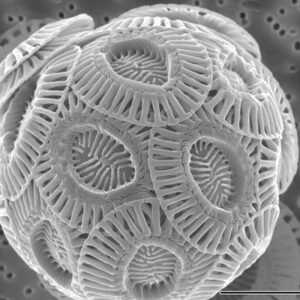
Coccolithophores are not only vital to climate, they are architecturally beautiful. (PLoS via Wikimedia Commons)
Calcifying planktonic organisms include a broad range of taxonomic groups, including coccolithophores, foraminifers, and shelled pteropods. These organisms thrive in Earth’s oceans and are not only primary drivers of the carbon cycle in the ocean but also play a pivotal role in regulating atmospheric carbon dioxide.
The carbon cycle has impacts on not only Earth’s temperatures, but also food supply. Coccolithophores in particular, produce calcium carbonate (CaCO₃) shells that sink to the ocean floor, sequestering carbon for millennia. This dual role (carbon fixation and long-term burial) makes them central to Earth’s climate regulation.
Yet, as highlighted in the recent Science review by Ziveri et al. (2025), earth system global climate models such as the Coupled Model Intercomparison Project (CMIP6) do not explicitly include the impact of these calcifying plankton groups in their models, despite the scope of their impact on ocean chemistry and carbon cycling. This omission reflects a broader gap in Earth system modeling: the underrepresentation of biological feedback and trait diversity in microscopic life.
To quantify the gap to be addressed in these models, Ziveri et al reviewed the three major groups of calcifying planktonic organisms: coccolithophores, foraminifers, and shelled pteropods, and estimated their regulatory impact on the Earth system including the geochemistry of the oceans. Their findings showed that the roles of these organisms are indeed too significant to ignore and may lead to inaccuracies in climate models, because they obscure the differential roles of these organisms in the climate system. They wrote:
“This synthesis reveals that a single representation of CaCO3 in climate models is unlikely to accurately reflect system dynamics or their impacts on biogeochemical cycling under climate change. We argue that understanding past and future CaCO3 cycle requires a better delineation of the traits that make up the diversity of calcifying plankton groups.”
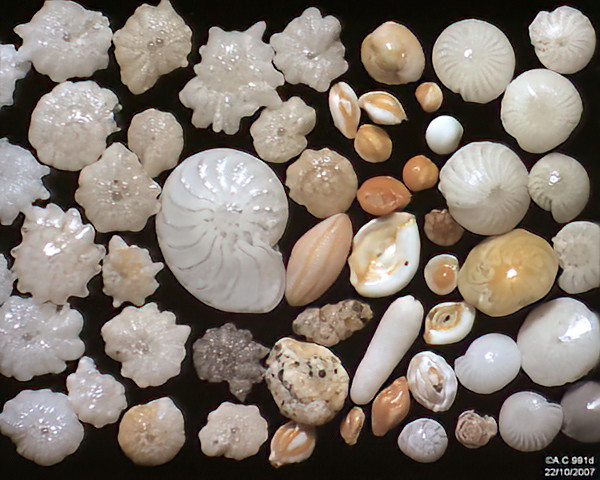
The microscopic beauty and variety of foraminifers. (Wikimedia Commons)
The authors’ findings are significant, as they show that the climate system is more complex than models presently account for. To improve climate projections, models must move beyond generic representations of CaCO₃ cycling and incorporate group-specific traits, and nuances involved with biological interactions. For accuracy, the authors should also account for regional variations in functions that may be moderated by differences in environmental conditions, recognizing the ecological processes that drive dissolution and export. Doing so will refine our understanding of carbon sequestration, ocean alkalinity, and climate feedback.
Revealing Gaps in Evolutionary Thought
Overly simplistic climate models were not the only gaps identified by the researchers. In describing their findings, the authors reveal “important unresolved question[s]” in the interpretation of the fossil record of these calcifying organisms retrieved in their sediment cores. Although anchoring their findings in an evolutionary framework, the authors inadvertently reveal how fossil record interpretation may be impacted by differential rates of dissolution at different depths of the core. The authors explained:
“Sediment cores provide a fossil record going back 65 million years, revealing large variation in organism size and diversity likely linked to changes in seawater carbonate chemistry (acidification) and warming. The extent to which shallow, selective dissolution has biased this record remains an important unresolved question. Addressing discrepancies between CaCO3 production and export from the upper ocean will require renewed focus on both quantifying and understanding the individual and combined contribution of these groups, as well as the biological processes driving shallow dissolution.”
The authors raise a valid point regarding dissolution. If dissolution preferentially removes certain species or shell sizes, then the sedimentary archive is not a neutral snapshot of past biodiversity, but a filtered and biased record. This challenges evolutionary claims of gradual morphological change or extinction patterns based solely on fossil abundance at different stratigraphic layers in the sediment record. Instead, it suggests that taphonomic processes (how organisms decay and fossilize) play a dominant role in shaping what we see. This highlights the critical importance of acknowledging the assumptions inherent in historical sciences such as palaeoclimatology in reconstructing historical fossil records, as the accuracy of interpretations hinge on the accuracy of the assumptions made.
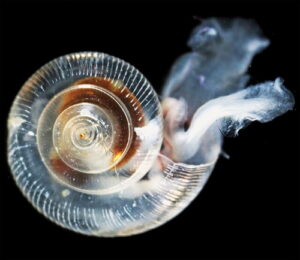
A pteropod (“wing-foot”) showing a similar Fibonacci spiral as large ammonites. (Wikimedia Commons)
Further to this, a gradualistic evolutionary perspective of fossil formation in itself raises questions, as gradual burials are not usually conducive to fossil formation. Instead, catastrophic processes and rapid burial are the conditions most favourable to fossilization.
It is also interesting that the authors quote such an extended timeframe of 65 million years, yet they only quote differences in morphology (size and shape) throughout the record for these organisms. With such massive changes in climatic conditions and other environmental factors supposedly occurring within this timeframe, how is that that these organisms could have remained stable over all those eons of time?
Not only does the stasis of these organisms through long eons of environmental stress pose unresolved questions for the evolutionary narrative, the emergence of their pivotal functionalities in Earth’s balance also poses a huge question. Functional complexities inherent in calcifying planktonic organisms require biochemically interdependent traits, including but not limited to pH regulation, carbon export efficiency and intracellular calcification. Even within the supposed 65-million-year sedimentary record, these traits are not explainable by incremental mutation and selection, especially given their simultaneous functionality and ecological integration.
The Significance in the Small: Something to Celebrate
From the micro-scale to the cosmos, new discoveries keep revealing the profound hidden wonders woven into our world. Calcifying planktonic organisms are one more example of engineering ingenuity in a microscopic package —this one being one that impacts habitability on a global scale. As more of these hidden wonders continue to be discovered, the call for awe toward God’s creation, and to responsible stewardship grows louder. Even secular scientists are now championing these oft-overlooked creatures as a number of European research centers just launched a bid to declare October 10 International Coccolithophore Day, honoring their vital role in our world’s balance.
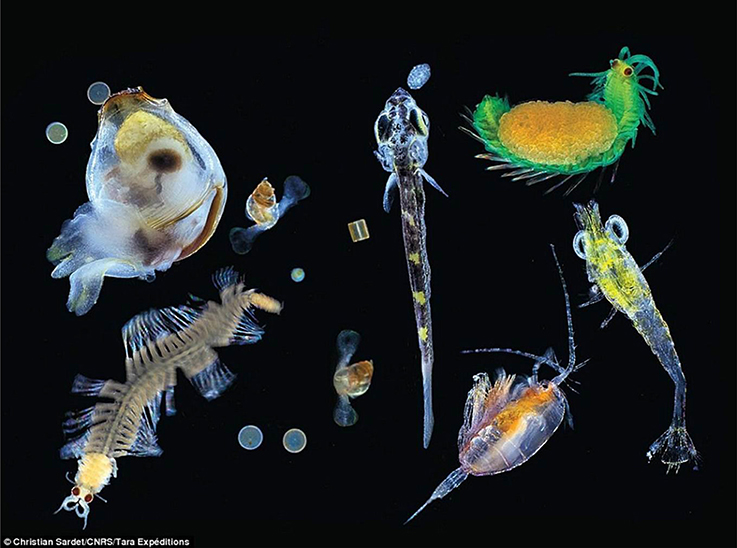
Watch and share the Short Reel about this article. Click to view it now.
Yet with discovery comes responsibility. As we uncover the intricacies of these remarkable creatures, scientists are challenged to adopt a posture of humility, acknowledging the limits of our models and the depth of the engineering design we seek to simulate. The study of plankton is not merely a technical pursuit; it is a call to praise our Creator, who reveals His power in the smallest things.
 Dr. Sarah Buckland-Reynolds is a Christian, Jamaican, Environmental Science researcher, and journal associate editor. She holds the degree of Doctor of Philosophy in Geography from the University of the West Indies (UWI), Mona with high commendation, and a postgraduate specialization in Geomatics at the Universidad del Valle, Cali, Colombia. The quality of her research activity in Environmental Science has been recognized by various awards including the 2024 Editor’s Award from the American Meteorological Society for her reviewing service in the Weather, Climate and Society Journal, the 2023 L’Oreal/UNESCO Women in Science Caribbean Award, the 2023 ICETEX International Experts Exchange Award for study in Colombia. and with her PhD research in drought management also being shortlisted in the top 10 globally for the 2023 Allianz Climate Risk Award by Munich Re Insurance, Germany. Motivated by her faith in God and zeal to positively influence society, Dr. Buckland-Reynolds is also the founder and Principal Director of Chosen to G.L.O.W. Ministries, a Jamaican charitable organization which seeks to amplify the Christian voice in the public sphere and equip more youths to know how to defend their faith.
Note: As this article goes to press, Sarah’s home country of Jamaica has just been devastated by Category 5 Hurricane Melissa. We appreciate your prayers for Sarah, her family and friends, and for the people of Jamaica.