
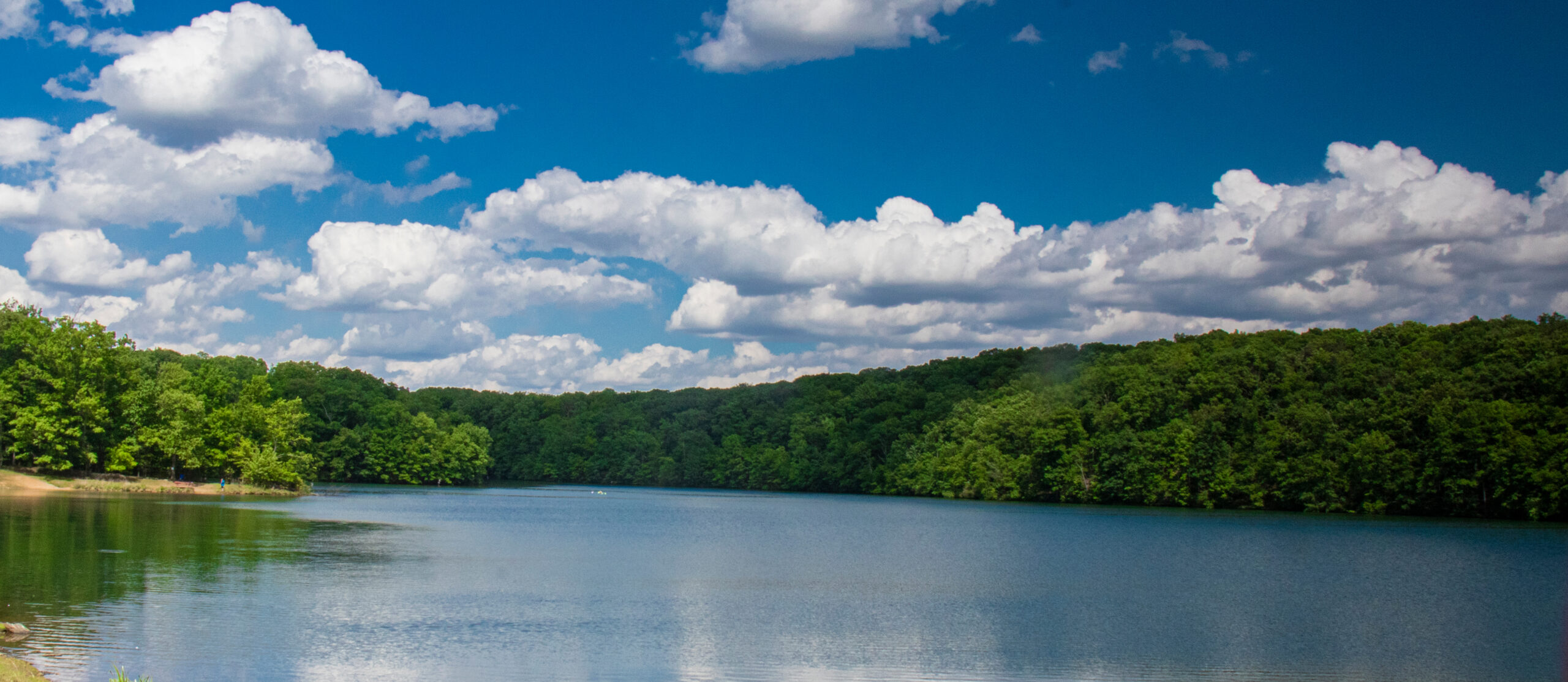


Earth’s Lakes Called the Lifeblood of Our Planet
For International Lake Day (August 27),
consider the amazing design in earth’s lakes
including evidence the earth is young
Ripples of Design
How Lakes Testify to God’s Wisdom
by Dr. Sarah Buckland-Reynolds
There’s something unforgettable about standing at the edge of a lake. Maybe you remember skipping stones across its glassy surface as a child, or watching the sun set while its reflection shimmered across the water. Lakes are indeed beautiful places of memory and wonder, yet their value goes far beyond their beauty and tranquility: lakes play a vital role in shaping earth’s ecosystems and are sites full of testimonies of design.
Given its importance being recognized as the “lifeblood of our planet”, World Lake Day was established formally on August 27, 2025 to build public awareness of the value of lakes. But, what makes lakes so valuable to be deemed as the “lifeblood of our planet”? Let us take the opportunity to explore the value of lakes as masterpieces of divine wisdom.

A Sierra backcountry lake (DFC)
Lakes as Ecosystem Engineers
 The earth’s surface is estimated to have over 100 million lakes. Despite hosting only a minority share of the earth’s surface (2-3%), the United States Geological Survey estimates that lakes hold nearly 87% of the planet’s liquid surface freshwater, making them immensely important for ecosystems, climate regulation, and human societies. So integral are lakes to earth’s ecosystem functions, that it has been found that the majority share of carbon sequestration is performed by lakes.
So rich is the biodiversity hosted in lakes that it is often termed as “living systems”. Within their waters, fish, amphibians, birds, and microorganisms find niches that sustain their existence, Globally, freshwater lakes are estimated to support over 100,000 species, representing over 10% of all known animal species despite covering less than 3% of Earth’s surface. An impressive example is Lake Baikal, which harbours more than 3,600 species with 80% endemism (being found only in that region).
Balance and Cycles
In addition to hosting rich biodiversity, one of the most vital ecosystem engineering function performed by lakes is nutrient cycling, particularly nitrogen, phosphorus and organic carbon. Nitrogen and phosphorus cycling enables the feeding of aquatic plants and sustaining food webs. The maintenance of a delicate balance is critical to ensure ecosystem resilience, as while plants require these minerals, excess nutrients can trigger harmful algal blooms. Healthy lake ecosystems naturally maintain the balance required for healthy ecosystem function, ensuring that nitrogen (0.5–2.0 mg/L) and phosphorus (0.01–0.1 mg/L) are continually recycled.
So important is this balance, that international groups such as the Organization for Economic Cooperation and Development (OECD) routinely monitors water quality to identify contamination effects from human interference or other factors that may trigger imbalance. When pollution is controlled, lakes’ natural balance provides not only environmental benefits but also economic and social services. Quoting from the OECD’s (2017) Eutrophication of Waters (OECD) Monitoring, Assessment and Control page:
“The impact of eutrophication on recreation and tourism is probably the most sensitive area for the public. It may severely alter the recreational value of many water bodies and impair related activities (swimming, fishing, etc.) as a result of the objectionable aspect of the waters, such as reduced transparency, odour, and increased incidence of stinging insects, swimmer’s itch, etc. Both social impacts and economic losses may be important and make eutrophication control necessary.”
In addition to nitrogen and phosphorus cycling, lakes play an integral role in other natural cycles, including the cycling of organic carbon. Lakes collectively store ~820 gigatons of organic carbon. predominantly in sediments, slowing its release into the atmosphere. This makes these ecosystems also vital for both functioning as sanctuaries of life as well as regulators of the global climate.
In addition to playing a substantial role in the earth’s carbon cycle, lakes operate using other amazing engineering processes that ensure that other elements such as oxygen are readily available for the ecosystems that they sustain. Lakes often have seasonal turnover where water layers in spring and autumn are mixed to distribute oxygen throughout the depths, preventing stagnation and death. This temporal precision is remarkable as it occurs at exactly the right times of year, driven by temperature changes and density differences in water. Such rhythmic order is not random; it is a finely tuned system that sustains life. As another ecosystem service, lakes also act as natural filters. Vegetation along their margins traps sediments and pollutants, while microbial communities within the water break down organic matter, transforming waste into nutrients.
Climate Preservation and Hydrological Balance
Beyond their ecological role, lakes also function as climate stabilizers. They absorb solar energy, moderating local temperatures. They also reduce risks of certain hazards such as floods by absorbing excess rainfall and recharge groundwater systems that sustain rivers during dry seasons. Due to their protected enclosure, subtropical lakes are also often used in historical climate research (termed palaeoclimatology), as a sort of “climate observatory,” recording changes in temperature, precipitation, and atmospheric chemistry in layers of sediment beneath the water. While the study of these layers come with their own sets of assumptions, the unique environment of lakes enable useful insights into resilience and adaptation.

God’s word and God’s world testify to his wisdom.
Lakes in the Evolution Debate
Amidst the marvelous functions of lakes, evolution is still often credited in public educational forums as the attributor of the rich biodiversity and processes found. For Lake Baikal, for example, the United Nations Educational, Scientific and Cultural Organization (UNESCO) stated that:
“Lake Baikal is the oldest (25 million years) and deepest (1,700 m) lake in the world.…its age and isolation have produced one of the world’s richest and most unusual freshwater faunas, which is of exceptional value to evolutionary science.”
But, can isolation over time really produce biodiversity that typifies lakes?
Is deep time really required to produce intricate structures?
A 2026 article expounding on Lake Untersee, Antartica – another isolated lake – places scrutiny on assumptions that extensive structures require deep time to form.
 The article titled: A Most Unusual Lake by the National Aeronautics and Space Administration (March 11, 2026), expounded upon “large, conical microbialite structures spread across the lake’s floor” that, surprised scientists as they are “similar to some of Earth’s oldest fossils” (that are supposedly over 3 billion years old), yet the structures in this lake appear modern. Not only is the age of these structures traditionally thought of as billions of years old; but evolutionary theory often claims such structures also require billions of years to form, serving as evidence of deep time. Yet in Lake Unter‑See, these formations are actively growing today, in a matter of decades or centuries.
This lake discovery therefore contributes to discourse questioning evolutionary assumptions, as it demonstrates that complex, fossil-like features can form rapidly under the right conditions. Such evidence aligns with a young-earth perspective, showing that palaeontological “proofs” of deep time are not as secure as often claimed.
Natural Lakes: Superior to Human Engineering
The superiority of natural lakes over artificial reservoirs further underscores design. Artificial lakes, created by dams or excavation, often suffer from eutrophication, algal blooms, and biodiversity collapse. Their ecosystems are shallow imitations, dominated by opportunistic species. They lack the seasonal rhythms of stratification and turnover, and they are more vulnerable to pollution and evaporation.
By contrast, natural lakes exhibit resilience and balance, with far greater species diversity and stability in their nutrient cycles. How could evolutionary accidents cause a superior system to emerge than carefully engineered artificial versions of lakes? All the evidence points to the existence of a Superior Engineer of our natural lake systems.
Awe at the Lake’s Edge
 As we commemorate World Lake Day right near the close of summer, let us not see lakes as mere scenery or resources; rather, as testimonies of design, ecosystems of precision, and climate regulators of profound importance. Lakes challenge evolutionary assumptions and point us instead to the Creator’s wisdom.
Just as Jesus called His disciples by a lake, these wonders of nature present a wonderful opportunity to start a conversation about God’s providence. So, on your next family outing or social by the lake, let us use this peaceful scenery set the stage to share the Good News of the Creator who not only created these wonders, but also walked on them, fed the spiritually and physically hungry, and who healed those who needed His touch. Lakes are another wonderful testimony and prompt to give glory to God, who made lakes not only to sustain life but to remind us of His wisdom, power, and care.
 Dr. Sarah Buckland-Reynolds is a Christian, Jamaican, Environmental Science researcher, and journal associate editor. She holds the degree of Doctor of Philosophy in Geography from the University of the West Indies (UWI), Mona with high commendation, and a postgraduate specialization in Geomatics at the Universidad del Valle, Cali, Colombia. The quality of her research activity in Environmental Science has been recognized by various awards including the 2024 Editor’s Award from the American Meteorological Society for her reviewing service in the Weather, Climate and Society Journal, the 2023 L’Oreal/UNESCO Women in Science Caribbean Award, the 2023 ICETEX International Experts Exchange Award for study in Colombia. and with her PhD research in drought management also being shortlisted in the top 10 globally for the 2023 Allianz Climate Risk Award by Munich Re Insurance, Germany. Motivated by her faith in God and zeal to positively influence society, Dr. Buckland-Reynolds is also the founder and Principal Director of Chosen to G.L.O.W. Ministries, a Jamaican charitable organization which seeks to amplify the Christian voice in the public sphere and equip more youths to know how to defend their faith.
Comments
I’m privileged to live less than a mile from a small, 1 mile long lake. I routinely bike around it for my daily exercise. During the winter it freezes over and several fishing huts mysteriously appear on it. 🙂
I like the paragraph about how natural lakes are far superior to man-made lakes. I’ve seen stories about how the water levels at man-made lakes or reservoirs can be severely low during droughts.