


Evolutionary Worldview Backfires
Darwinists would likely rather
not see these consequences of
their worldview in the culture
 How evolutionary biology became an unwilling ally of the manosphere (The Conversation, 28 Oct 2026). Did Darwinism promote “toxic masculinity?” Does the new trend toward maximizing male appearance and acting out male superiority find its roots in evolutionary theory?
From steroid use to “bone smashing”, the “looksmaxxing” movement is only the latest example of the manosphere’s toxic hold on young people.
Less obvious is the role ecologists have unwittingly played in its rise. Contemporary male supremacist arguments routinely borrow from evolutionary biology and behavioral ecology, and that should give ecologists pause.

Man looks on the outward appearance, but God looks on the heart. I Samuel 16:7
There’s nothing inherently wrong in a man desiring to look his best and stay fit and strong. That comes with the genes and is as old as humanity. The motive in the new “male supremacy” movement, however, has unhealthy ramifications on the individual and his sphere of influence, including women who have to deal with guys who look at themselves as biological “alpha males,” say Eric Harvey and François-Xavier Habima at the University of Quebec.
Today, members of the manosphere ground their ideology primarily in biology.
This shift gives them a rhetorical advantage: they can claim that their fatalism and misogyny simply reflect the natural order. Their grievances then appear to rest on facts while feminist demands are dismissed as ideology.
Harvey and Habima try to distance themselves from “evolutionary psychology”—
Evolutionary psychology, which aims to explain human behaviour through the principles of evolutionary biology, is a field that has drawn heavy criticism within academia.
The manosphere is particularly fond of evolutionary psychology, which seeks to link evolutionary mechanisms directly to human behaviour. It’s much easier to cite a study claiming that evolution drives women to marry high-earning men than to try to explain women’s personalities by studying animal behaviour.
What should worry ecologists is this: just as the manosphere borrows from evolutionary psychologists, evolutionary psychologists borrow from ecologists.
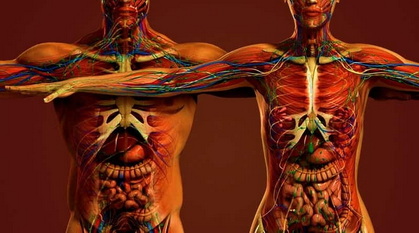
There’s more to humanity than anatomy and physiology.
But if humans are mere animals, then evolution is what evolution does. Behavior is a consequence of natural selection like everything else, right? Do these professors want to get religion and claim that toxic masculinity is somehow wrong? Watch the words “need” and “must” in their sermonette:
This is why ecologists need to be more careful than in the past. An entire field of psychology is combing through the ecological literature, seeking to link evolutionary theories to the complexities of the human mind, regardless of the intentions of the scientists who developed them.
They quickly clarify their motives to keep Darwin Worship intact:
Our aim is not to cast aspersions on evolutionary biology or behavioural ecology, but to make researchers and the public aware of the repercussions this research can have in the current political climate. Today, people use science not only to define their environment but also to define themselves. That is why ecologists must choose their words carefully and interpret their findings with caution.
Hey, Harvey and Habima, take it easy. Chill. Unless you wish to carve out exceptions, everything in the biosphere is a consequence of evolution: behavior, culture, and the thoughts of males who think they are superior. Evolution even produced your own anxiety about them. No worries. The fittest will survive.

We are created equal. (Creation Museum)
The Biblical worldview solves this by teaching that God created us in the image of God, male and female, and declared both “very good.” The sexes were created to complement each other. Both need one another. In God’s sight, both are created equal. “There is neither Jew nor Greek, there is neither slave nor free, there is neither male nor female; for you are all one in Christ Jesus” (Galatians 3:28).
 Humans evolved to be surprisingly fat – no wonder we struggle with dieting (New Scientist, 4 Nov 2026). Evolutionary biologist Daniel Lieberman tells us how we evolved humans ought to think about food.
We evolved to eat absolutely everything. Hunter-gatherers are not trying to find just the right diet for their heart so they can live to be 80 or 90 and avoid osteoporosis and Alzheimer’s. They’re trying to get enough food so they can survive and have as many children as possible, just like every other animal.
So why fight it? Why argue that evolution did us wrong? “We evolved to have a lot of fat because fat played an incredibly important role in our evolutionary history,” Lieberman says. Raid the refrigerator, you looksmaxxing males. Look like you evolved to be!
I think one of the key messages from an evolutionary perspective is that if you’re struggling to figure out what to eat, if you’re struggling to exercise, if you’re struggling to lose weight, it’s not your fault. It’s because of our evolutionary history.

A more accurate march of human evolution. Note: first figure at left is mythical.
As for why humans “should” eat healthy, Lieberman argues that we haven’t had enough time to evolve adaptations for ultra-processed food. What??? He’s putting a limitation on the almighty power of evolution? For shame! Be fat and have a lot of babies! That is your purpose in life. “Fitness” in Darwinian terms means leaving the most offspring. It has nothing to do with a slim, trim, muscular physique.
 Why haven’t farm animals evolved against humans? A biologist explains why there won’t be a chicken uprising anytime soon (The Conversation, 19 Oct 2026). Remember Alfred Hitchcock’s horror movie The Birds? What if the animal kingdom rose up against their human persecutors and wiped them off the planet?
If everything evolves, then circular reasoning is a product of natural selection, too. Alida de Flamingh, professor of evolutionary genomics at the University of Tennessee, illustrates this conundrum. She answers a “Curious Kids” question with a just-so story that assumes evolution to argue for evolution. The basic answer: evolution made humans stronger.
On the farm, people hold all the power. Because of the process of domestication through selective breeding, farm animals cannot evolve to protect themselves from humans.
Of course they could. Evolution can do anything. Besides, oxen and horses are more powerful than humans anyway and could easily trample them, kick them, or gore them. If evolution gave armor and skeletons to Cambrian animals long ago to protect them from their predators, evolution could certainly do so today.
Humans could be prey for many animals even now, but for some reason, most animals have a natural fear of humans. Ever wonder why that might be? (7 Aug 2026).
 The Selfish Gene, 50 years on — it’s time for an update (Nature Essay, 26 October 2026). Half a century ago, Dawkins’s masterpiece was one of the most influential books on evolution in the 20th century. But now, its influence deserves to be demoted, writes Nathaniel Comfort: “A focus on the gene alone has become outdated. Books that capture the complexity of life deserve centre stage.”
Re-reading it now, with decades of scholarship in the history of biology under my belt, it seems less benign. The determinism baked into the “gene’s-eye view” in the book troubles me, as does the passivity of the organism in Dawkins’s telling — a “vehicle”, a mere “replicator”. The implication: that traits such as aggression are hard-wired into people. Fortunately, over the past couple of decades, new tools, fresh models and scholars in many disciplines have begun to embrace the complex reality of biology. Readers in search of an understanding of life on Earth today would do better to reach for books that take a broader view.
It should be little comfort to Nathaniel that evolution evolves. If everything evolves, even one’s understanding of evolution is fluid: a Hegelian klein bottle where you never get to a destination and no one is ever certain of anything.
Incidentally, the University of Lincoln debunked Dawkins:
 Are Humans Naturally Violent? New Research Challenges Long-held Assumptions” (U of Lincoln, 19 March 2026). So even Dawkinsism evolves. His thesis has met its antithesis, leading to a new evolutionary synthesis:
The findings challenge the idea that violence can be understood as a simple evolutionary inheritance.
Rather than aggression forming a single continuum that escalates from mild disputes to lethal outcomes, the research suggests different forms of aggression emerge under different evolutionary and social conditions.
This means the relationship between everyday conflict and extreme violence may be far weaker than many theories have assumed.
Whew. We don’t have to be violent. Sounds good for now. But just wait: the new thesis will meet another antithesis, and evolutionary thought will migrate who knows where; maybe even in circles.
This article could be continued with recent papers about animal poaching, child trafficking, terrorism, and other evil activities by humans. Some of these do not mention evolution specifically, but how else is a Darwinian to explain them? Having rejected a transcendent holy God with moral commandments, evolution is the only game in town.

Classic book on Darwinism by the late journalist Tom Bethell.
Back and forth they go: one group suggesting that rape was an evolutionary strategy, other evolutionists decrying such a notion as a misuse of evolutionary theory; one group preaching evolutionary determinism and others in horror reacting to that view. Nothing is ever settled or certain. It’s all process, a human behavioral phenomenon of constant change and shifting opinion. Once in awhile, the human imago Dei pops up demanding to be heard, but is quickly swallowed up by the fogma of evolution. If radical Islamists were to wage an intifada on academia, and burn university science departments, could they complain? Nothing is good or evil. It just is.
Darwinism is a house of cards built on quicksand in a windstorm.
Jesus said,
“Therefore whoever hears these sayings of Mine, and does them, I will liken him to a wise man who built his house on the rock: and the rain descended, the floods came, and the winds blew and beat on that house; and it did not fall, for it was founded on the rock. “But everyone who hears these sayings of Mine, and does not do them, will be like a foolish man who built his house on the sand: and the rain descended, the floods came, and the winds blew and beat on that house; and it fell. And great was its fall.” (Matthew 7:24-27).
We’re watching the evolutionary house of cards collapse in slow motion. It’s been 167 years so far and counting.